
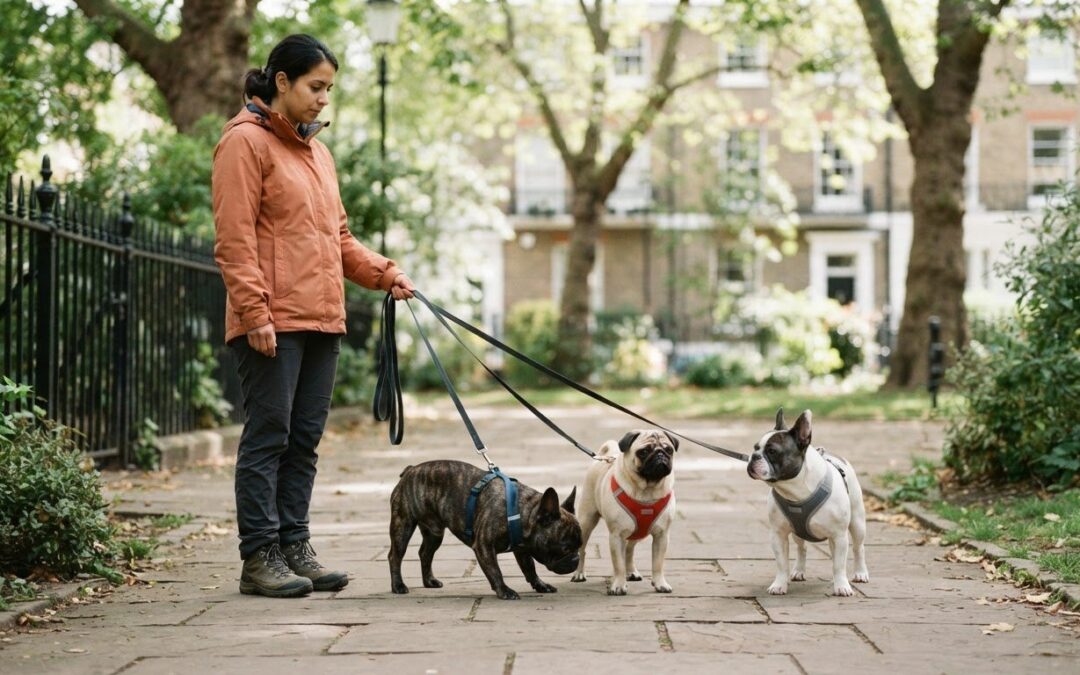
A flat face can change what a safe walk looks like. Brachycephalic dogs have a shortened skull that gives the face its flattened appearance, and some have narrowed airways that make breathing, exercise and cooling down more difficult. A dog walker for brachycephalic breeds needs to put each dog’s comfort ahead of covering a set distance.
It’s understandable to wonder whether noisy breathing is simply part of your dog’s appearance or a sign that activity needs adjusting. Head shape can affect health, but the impact varies between dogs. Knowing what to look out for can help you make calm, informed choices about daily walks.
This article explains what defines brachycephaly, how breathing difficulties and reduced heat tolerance can affect exercise, and which signs mean a walk should pause. You’ll also learn how a thoughtful walking routine can account for your dog’s pace, breathing and surroundings.
Key Takeaways
- Learn how a shortened skull shape can affect breathing, exercise tolerance and a dog’s ability to cool down.
- Recognise why noisy breathing or tiring quickly may call for a gentler walk and attention to your dog’s comfort.
- Understand how health differences between individual dogs shape their walking needs and the experience a suitable walker should bring.
- See how H&H Dog’s Group Dog Walking may fit into your dog’s care when their needs and comfort suit a group setting.
Exercise intolerance and thermoregulation problems
A shortened facial structure can make exercise and temperature regulation more demanding for brachycephalic dogs. Safe activity depends on breathing function, the dog’s condition and the environment, not the breed name alone.
Assessing Exercise Tolerance
An exercise tolerance test assesses how a dog copes with activity, while functional grading records the severity of brachycephalic obstructive airway syndrome (BOAS). These assessments help show whether breathing limits exercise capacity. Veterinary practices should include exercise tolerance tests and functional grading in annual health assessments. Tests also increase diagnostic sensitivity for BOAS, helping owners understand whether a dog’s breathing needs closer attention.
Exercise Intolerance and Overheating
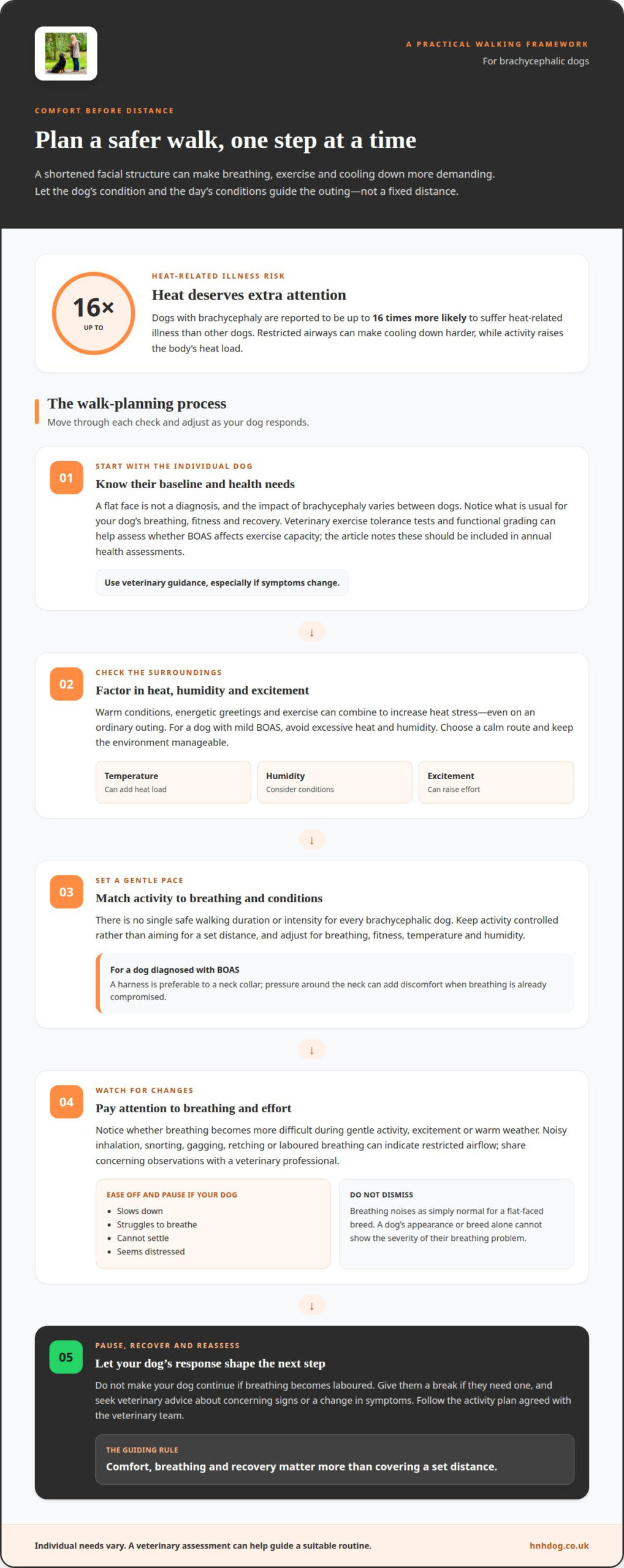
Exercise intolerance and overheating can reinforce each other: activity raises the body’s heat load, while airway problems can make cooling less effective. Compared with dogs without brachycephalic conformation, affected dogs have reduced capacity for thermoregulation. Dogs with brachycephaly are up to 16 times more likely to suffer heat-related illness than other dogs. For a dog with mild BOAS, avoid excessive heat and humidity.
Heat Stress During Activity
Warm conditions, excitement and exercise can combine to increase heat stress, even on an ordinary outing. A busy pavement, energetic greetings or chasing a ball can raise effort and excitement at the same time. Because breathing helps regulate body temperature, restricted airways can make cooling down harder. Choose a calm route, keep activity controlled and pause if breathing becomes more laboured or your dog seems distressed.
Safe Walking Duration and Intensity
There is no single safe walking duration or intensity for every brachycephalic dog. Match activity to the dog’s breathing, fitness and the day’s temperature and humidity. Keep walks gentle and controlled rather than aiming for a set distance. A dog that slows down, struggles to breathe or cannot settle needs a break. A veterinary assessment can help guide a suitable routine, especially if symptoms change.
Is there a link between head shape and health issues?
Yes. Brachycephaly describes a shortened skull shape that gives the face a flattened appearance. Its physical effects vary between dogs, but this conformation can be associated with respiratory, eye, skin, dental, spinal and birthing problems. A flat face is not a diagnosis: the dog’s structure and symptoms matter.
Brachycephalic obstructive airway syndrome (BOAS) is one important concern. Upper-airway abnormalities can make breathing difficult and may be associated with overheating, sleep apnoea and regurgitation. Pugs, French Bulldogs and English Bulldogs are among the breeds frequently affected, but breed alone cannot show how severely an individual dog is affected. A veterinary assessment can help distinguish typical breathing from signs of a health problem.
Other concerns can affect everyday comfort and movement. Prominent eyes may be more vulnerable to injury, while facial skin folds can develop recurrent infections. Crowded teeth may contribute to dental problems, and some dogs experience spinal or gait issues that affect activity. These conditions do not affect every brachycephalic dog, and the combination varies from one dog to another.
Research findings also underline why health deserves attention. Dogs with extreme brachycephalic conformation had a reported average lifespan of 8.6 years, compared with 12.7 years for other breeds. This comparison describes groups, not an individual dog’s life expectancy. Owners can support welfare by observing changes in breathing, eye comfort, skin condition, walking and recovery after exercise, then seeking veterinary advice about concerning signs.
UK dog-walking requirements can involve separate questions of insurance, licensing and animal welfare, and the rules may depend on location and activity. Don’t assume one licence or insurance requirement applies to every professional walking arrangement. Clarify the requirements for the specific service and area.
Health initiatives also focus on better recognition and prevention. The Royal Kennel Club Charitable Trust funds BOAS research at Cambridge University, aiming to improve affected dogs’ health and support informed breeding choices. For owners, the practical point is to understand the individual dog’s needs rather than treating a breed label as a complete guide.
Breathing difficulties and noisy breathing
Brachycephalic obstructive airway syndrome (BOAS) describes breathing problems linked to upper-airway abnormalities. In Pugs, French Bulldogs and English Bulldogs, narrowed nostrils or other airway changes can restrict airflow. A short muzzle doesn’t show how severely an individual dog is affected, so notice any changes from their usual breathing.
Snorting, noisy inhalation, gagging, retching and laboured breathing can indicate restricted airflow. Some dogs also struggle during sleep or regurgitate after eating. Don’t dismiss these signs as simply normal for French Bulldogs or other flat-faced breeds. Notice whether breathing worsens during gentle activity, excitement or warm weather, and share your observations with a veterinary professional.
BOAS severity differs between dogs, even within the same breed. Clinically significant signs have been identified in 50% of Pugs and French Bulldogs, and 45% of Bulldogs. Those figures describe groups, not a diagnosis for an individual. A veterinary assessment can evaluate breathing and functional impact, rather than relying on facial appearance or breed alone.
For a dog diagnosed with BOAS, a harness is preferable to a neck collar. Pressure around the neck can add discomfort when breathing is already compromised. Keep outings controlled, don’t make your dog continue if breathing becomes laboured, and follow the activity plan agreed with the veterinary team.
Watch for a clear change from your dog’s usual state. Increasingly laboured breathing, distress or difficulty recovering after activity needs prompt attention. A respiratory crisis is an emergency. Arrange immediate transport to a veterinarian or the nearest emergency hospital; don’t wait to see whether severe breathing difficulty resolves on its own.
Recognising signs early supports your dog’s welfare, as you can respond to symptoms instead of interpreting persistent noise as harmless breed character. Note what you observe, such as noisy breathing at rest or difficulty after a short walk, and describe the pattern during a veterinary appointment. These details can help guide assessment and care.
What qualifications or experience should a dog walker have for brachycephalic breeds in the UK?
Look for practical understanding of breed-related breathing concerns, not just familiarity with a dog’s appearance. A good dog walker for brachycephalic breeds should notice changes in breathing, understand how heat and exertion can affect comfort, and stop activity when needed. Experience with a Pug or French Bulldog can help, but each dog still needs individual care.
Qualifications can show relevant study, but a certificate alone doesn’t show how someone responds on a walk. Look for experience observing dogs calmly, following care information provided by the owner, and adapting activity to the dog in front of them. For example, a walker should be willing to keep the route gentle if a dog tires early, rather than prioritising distance or pace.
Good care also depends on clear communication before and after outings. A walker needs to understand your dog’s usual breathing, any BOAS diagnosis, and the signs that mean activity should stop. Useful information includes:
- The dog’s normal breathing and recovery after gentle activity.
- Known health concerns and relevant veterinary advice shared by the owner.
- Environmental triggers, such as warm weather or excitement around other dogs.
- What to do if breathing becomes laboured or the dog appears distressed.
During a walk, attentive observation matters more than completing a planned route. A dog that slows down, struggles to breathe or cannot settle needs a pause and a calm response. The walker should tell you about changes promptly so you can decide whether to seek veterinary advice. For a dog diagnosed with BOAS, the routine should follow their existing care plan.
Choose care that treats your dog’s comfort as the measure of a successful outing. Discuss your dog’s walking needs and the individual support that helps them feel at ease.
H&H Dog
H&H Dog can discuss how your dog’s individual needs fit their care and walking routine. Its Group Dog Walking may suit a dog who is comfortable walking with others and whose exercise plan allows for a shared outing. If your dog needs quieter, controlled activity or has breathing symptoms, follow veterinary advice when deciding whether group walks are appropriate.
Share practical details about your dog’s usual breathing, activity tolerance and any guidance from your veterinary team. This keeps your dog’s comfort central when discussing their walking needs. H&H Dog also provides grooming services, including Full Groom, Bath & Brush and Puppy’s First Groom, for other aspects of your dog’s care.
Contact H&H Dog to discuss your dog’s needs and whether Group Dog Walking could suit their routine.
Make the next walk a thoughtful one
Your dog’s comfort can shape each outing. Rather than measuring success by distance, consider whether your dog can move calmly, breathe comfortably and recover without distress. Share their usual routine and any veterinary advice with the person caring for them so these details can inform a more considerate plan.
Choosing a dog walker for brachycephalic breeds means finding care that respects your dog’s individual signals. H&H Dog offers Group Dog Walking, alongside Full Groom, Bath & Brush and Puppy’s First Groom. These services support different parts of a dog’s routine, while walking decisions should reflect the needs you’ve discussed for your own dog.
To talk about your dog’s walking needs, contact H&H Dog about dog walking. A calm, attentive approach can help make everyday care feel more manageable for both of you.
H&H Dog helps tailor care to your dog
H&H Dog offers group dog walking alongside grooming, training and behavioural consultations. With over 20 years of experience, the team specialises in personalised care tailored to each dog’s individual needs and temperament.
If you’re considering a dog walker for a brachycephalic breed, contact H&H Dog to discuss whether group dog walking suits your dog and what care fits their needs.
Frequently Asked Questions
What is a brachycephalic dog?
A brachycephalic dog has a shortened skull and a relatively flat-looking face. Pugs and French Bulldogs are familiar examples, while Boxers and Staffordshire Bull Terriers can have less exaggerated facial features. The term describes conformation, not a health diagnosis. Dogs with similar-looking faces can have different airway function, so appearance alone doesn’t establish whether a particular dog has breathing difficulties.
What issues do brachycephalic features cause?
Brachycephalic features can be associated with breathing problems, eye disease, skin infections, dental concerns, spinal issues and difficulties with mating or giving birth. Which problems occur varies between dogs. One dog, for example, may have skin-fold irritation without obvious breathing symptoms, while another may tire or struggle to breathe. Changes in comfort, movement or everyday behaviour are good reasons to seek veterinary advice.
What signs of breathing distress or heatstroke should a dog walker watch for?
Watch for laboured breathing, distress, unusual gagging or retching, and difficulty recovering after activity. A dog that suddenly slows down, seems unable to settle or shows a marked change from their usual behaviour also needs attention. If severe breathing difficulty suggests a respiratory crisis, arrange immediate transport to a veterinarian or emergency hospital. Share what happened and when the symptoms began.
How should walks be adjusted for brachycephalic dogs in hot or humid weather?
Choose a cooler time and a quieter, shaded route, and keep the outing gentle rather than encouraging sustained exertion. Avoid excessive heat and humidity, particularly for dogs with mild BOAS. Let the dog set the pace, and return to a cool, calm place if breathing becomes harder or they seem distressed. Don’t let a planned route take priority over your dog’s condition.
What questions should owners ask when choosing a dog walker for a pug, French Bulldog or similar breed?
Ask how the walker adapts outings to your dog’s usual pace, what they do if breathing changes, and how they report concerns afterwards. Explain any veterinary advice and ask how it will guide the walk. You can also ask whether they use a harness for a dog with BOAS and how they respond to warm or humid conditions. Their answers should address your dog’s actual needs.
How can owners find dog walkers experienced with brachycephalic breeds near them?
Look for local walking services, then discuss your dog’s individual needs and ask for practical examples of how the walker adjusts activity. In London, H&H Dog offers Group Dog Walking in NW1-NW8, NW11, N2, N3, N6 and W9. Share relevant veterinary advice and your dog’s usual breathing pattern when discussing whether group walking fits their routine.