
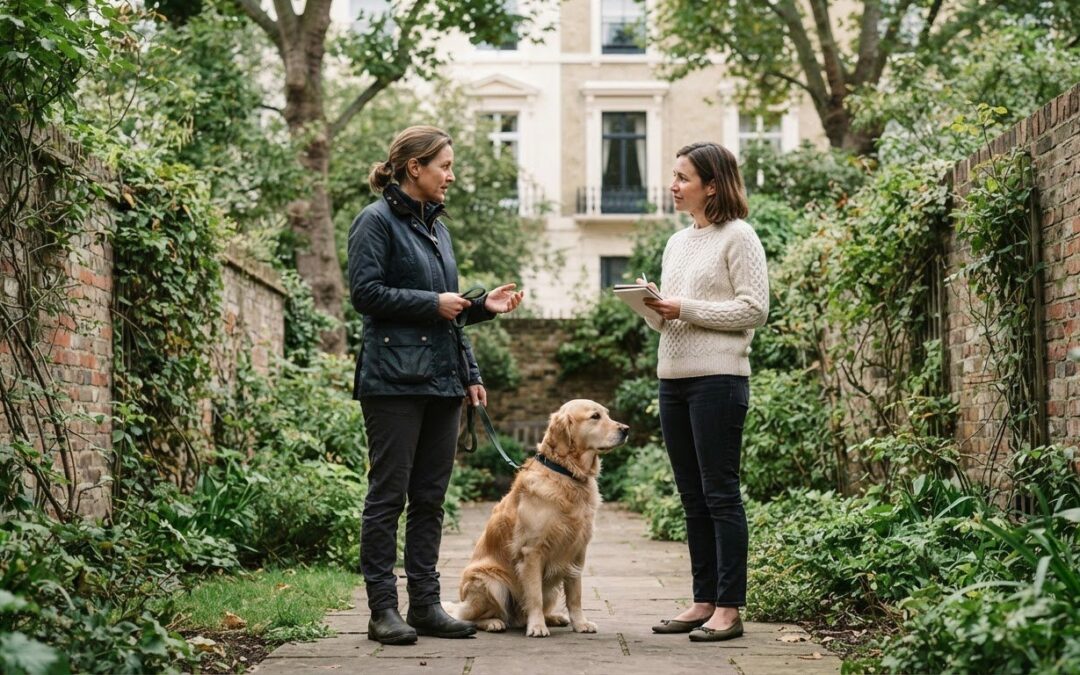
A usual walk isn’t always the kindest option. A dog walker for dogs in heat should agree a tailored plan with the owner. While she’s in season, that may mean lead-only toilet breaks in a private yard instead of public walks. If walks continue, choose cooler early mornings or late evenings and adjust the length to her comfort.
It’s understandable to want your dog’s routine to feel reassuring while protecting her from stressful encounters with other dogs. Tell the walker when she’s in season so you can plan care around her needs rather than relying on a standard outing.
This article explains how to discuss your dog’s season with a walker, what alternatives to consider, and how to plan suitable timing and walk lengths. You’ll also find practical precautions for keeping outings calm and controlled, helping you make a thoughtful decision together.
Key Takeaways
- Tell the walker your dog is in season and agree practical alternatives, such as lead-only toilet breaks or using dog nappies.
- Plan any necessary outings for cooler early mornings or late evenings, and keep them suited to your dog’s comfort.
- Season-time walks can be discussed, but the route, lead control and likelihood of meeting off-lead dogs all matter.
- Prepare for heat and unexpected encounters by agreeing clear precautions with the walker before care begins.
1. Communicating with owners about alternatives
Tell the walker your dog is in season before agreeing care. Share when bleeding began, any changes in behaviour, and how she responds around other dogs. A dog’s first season often starts between 10 and 14 months, though it may begin as late as 18 months. If you’re unsure about her stage, describe what you’ve observed rather than guessing.
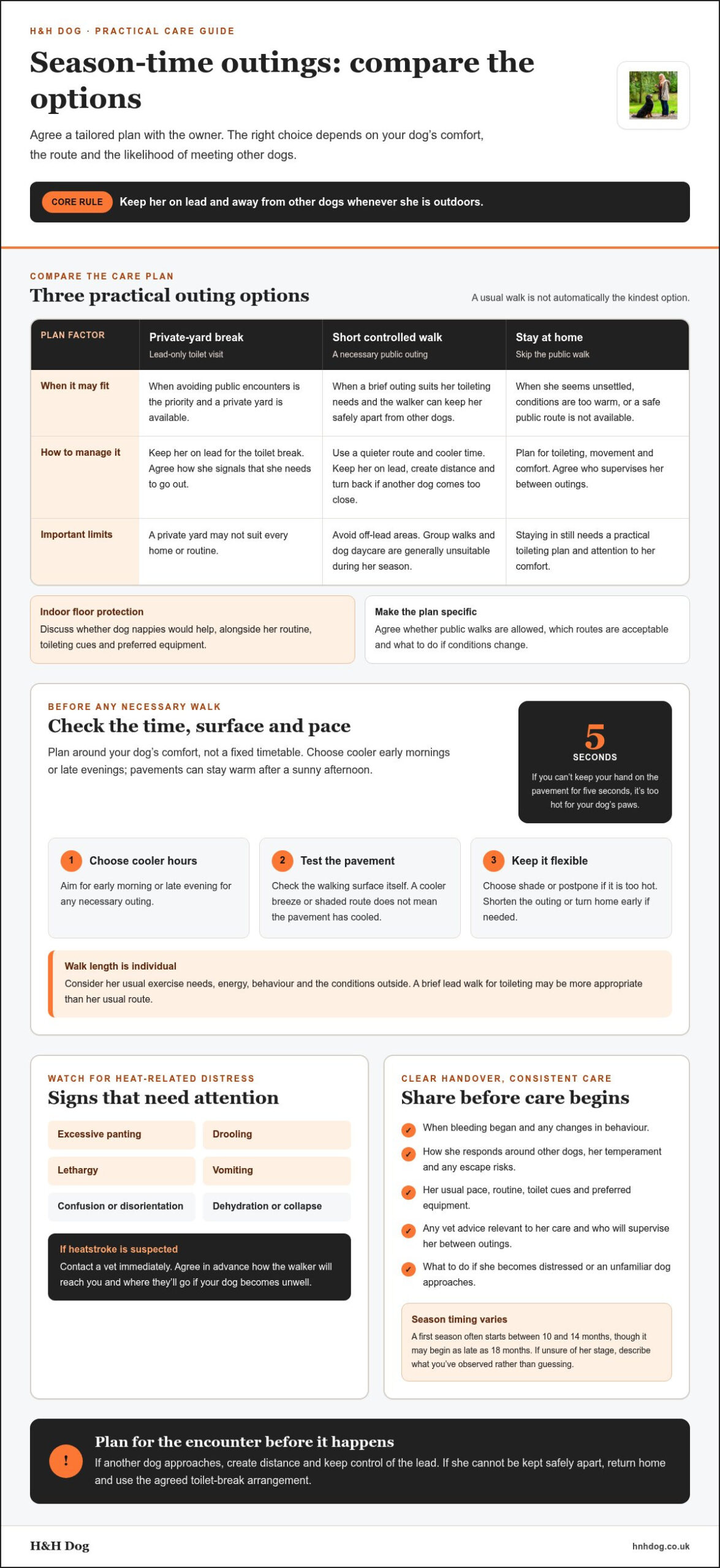
Agree on a practical plan together. Options include lead-only toilet breaks in a private yard, shorter outings, or staying at home instead of taking public walks. Discuss whether dog nappies would help protect floors indoors, and explain her routine, toileting cues and preferred equipment. Be clear about who will supervise her between outings.
A dog in season should stay on lead and away from other dogs outdoors. Public encounters can attract unwanted attention and make it harder to keep her safely apart, particularly where off-lead dogs are common. Group walks and dog daycare are generally unsuitable during her season, so arrange separate, controlled care or toilet breaks instead.
There’s no single UK-wide charge for season-related care. The fee depends on the arrangement and is provided after a quote request. Factors may include walk length, individual or group care, and whether the visit is for a toilet break only.
When looking for a suitable walker in London, use your postcode and discuss a specific situation before booking. For example, ask how they would respond if an off-lead dog approached. Look for a calm plan that focuses on creating distance, keeping control of the lead and avoiding busy routes.
Before booking, tell the walker her season dates, temperament, usual routine, escape risks and any vet advice relevant to her care. Ask what they’ll do if she becomes distressed or an unfamiliar dog approaches. A clear handover helps the walker provide consistent, considerate care.
2. Walk timing and duration
Choose cooler times for any necessary outing, such as early morning or late evening. In London, pavements can stay warm after a sunny afternoon, so check the route before setting off. A dog walker for dogs in heat should plan around the dog’s comfort, not a fixed timetable. Agree on a short toilet break instead if she seems unsettled or the conditions feel too warm.
Use the five-second pavement test before walking. If you can’t keep your hand on the ground for five seconds, it’s too hot for your dog’s paws. Choose a shaded route or postpone the outing. A cooler breeze doesn’t necessarily mean the pavement has cooled, so check the walking surface itself.
There’s no single suitable walk length for every dog in season. Base it on her usual exercise needs, energy, behaviour and the conditions outside. For example, a brief lead walk for toileting may be more appropriate than her usual route if she’s restless or attracting attention. Keep the route flexible and be ready to turn home early.
Ask the walker to watch for excessive panting, drooling, lethargy or vomiting, which can signal heat-related distress. Confusion, disorientation, dehydration or collapse are also concerning signs. If heatstroke is suspected, contact a vet immediately. Agree in advance how the walker will reach you and where they’ll go if your dog becomes unwell.
Before the next outing, share your dog’s usual pace and preferred toilet routine, then agree when to shorten or skip the walk. A simple plan can cover the time of day, route, water access and update to you afterwards. For help shaping a routine around your dog’s needs, explore personalised dog care options.
3. Can dog walkers in the UK walk a dog that is in season?
A dog walker can walk a female dog in season if they agree a suitable plan with her owner. The right choice depends on the dog, the route, nearby dogs and the walker’s ability to maintain a safe distance. A short, controlled outing may meet her toileting needs, while staying at home may suit her better.
The main outdoor concern is contact with other dogs. A female in season may attract attention, and an approaching dog can be difficult to manage in a busy London park. If off-lead dogs are common nearby, the risk of an unexpected encounter increases. Choose a quieter route, keep her on lead and turn back if another dog comes too close.
Some carers prefer to keep a female dog indoors during her season, taking her into a private yard on lead for toilet breaks instead of going for walks. This avoids public encounters, but may not suit every home or routine. Discuss what facilities are available, how she signals that she needs to go out, and whether a familiar garden can offer a calm alternative.
Before deciding, agree who will make the call if conditions change. For example, the walker could offer a brief toilet break instead of the usual route if a park is crowded. Make the plan specific: identify acceptable routes, say whether public walks are allowed, and agree how the walker will prevent contact with other dogs. That way, both of you know what to do before an encounter happens.
A walk isn’t automatically the best option just because it’s part of her routine. Likewise, keeping her inside calls for a practical plan for toileting, movement and comfort. Choose an arrangement that suits your dog, then review it if her behaviour or surroundings change during her season.
4. What precautions should a dog walker take when walking a female dog in heat?
Follow the agreed plan, not the usual route. Keep your dog securely on lead, avoid off-lead areas and create distance from approaching dogs. In a busy London park, turn onto a quieter path instead of waiting near a group of dogs. If you can’t keep her safely apart, return home and use the agreed toilet-break arrangement.
Choose early morning or late evening for any necessary trip outdoors, when temperatures are cooler. Check the pavement before setting off: if you can’t keep your hand on it for five seconds, it’s too hot for your dog’s paws. Shade won’t help if the walking surface is still hot, so change the route or postpone the outing.
Watch closely for excessive panting, drooling, lethargy or vomiting. Confusion, disorientation, dehydration and collapse can signal more serious heat-related distress. If you suspect heatstroke, contact a vet immediately and begin cooling your dog with cool water while arranging help. Never leave her in a vehicle, caravan, conservatory or outbuilding in warm weather, even briefly.
Keep the outing calm and predictable. Carry water, use familiar equipment and avoid busy pavements where another dog could approach suddenly. A dog in season may need a brief toilet trip instead of a full walk. Return indoors if she becomes distressed, struggles in the heat or can’t be kept safely apart from other dogs. Tell the owner promptly about any change.
Before care begins, agree the emergency contact, preferred route and circumstances that mean ending the walk. A clear plan helps the walker respond consistently, without making rushed decisions outdoors. For a considered conversation about your dog’s walking needs, discuss a suitable walking plan.
A service-dog raiser said that females in heat are generally kept at home and indoors, taken into the yard on lead to toilet, and not taken on walks. This is a more restrictive option when outdoor time isn’t part of the agreed care plan.
If the owner chooses this approach, treat the lead-controlled yard visit as a toilet break, not an invitation to extend the outing. Confirm the arrangement before care begins, and don’t replace it with a street walk. If you can’t manage the dog as agreed, contact the owner promptly for direction.
H&H Dog: Full Groom
H&H Dog offers Full Groom for owners whose next priority is coat care. Grooming is separate from arranging walks during a season, so keep the agreed walking and toileting plan in place. If grooming is also on your list, choose the service that suits your dog’s care needs rather than treating it as a substitute for seasonal support.
For a lighter grooming option, H&H Dog also offers Bath & Brush. Keeping each need clear helps you plan consistent care, from daily routines to coat maintenance. If you’d like to discuss H&H Dog’s Full Groom or other care, visit hnhdog.co.uk.
Make the next step a considered one
Turn your decisions into a brief care note that remains useful after your dog’s season. Include her toileting cues, preferred equipment, familiar routes and who to contact if plans change. Add details that help a walker understand her responses, such as whether she seeks quiet or becomes unsettled around unfamiliar dogs. A clear note gives everyone a shared reference and avoids leaving your dog to adapt to uncertain expectations.
A dog walker for dogs in heat needs practical, dog-specific information to plan care. As her behaviour and routine settle, update the note so future care reflects her needs rather than assumptions. This makes handovers more thoughtful and supports continuity between home and walks.
For separate coat-care needs, H&H Dog offers Full Groom, Bath & Brush and Puppy’s First Groom. Contact H&H Dog today to discuss its grooming services. With a clear plan and attentive care, you can make the next step at a pace that feels right for your dog.
H&H Dog offers personalised care for dogs in heat
H&H Dog provides personalised care tailored to each dog’s needs and temperament, drawing on over 20 years of experience. If you’re considering a dog walker for a dog in heat, get in touch to discuss what support may suit your dog.
H&H Dog offers Group Dog Walking, along with grooming, training and behavioural consultations. Mobile dog grooming is also available when grooming is part of your dog’s care needs.
Frequently Asked Questions
What alternatives to walks can keep a dog in heat exercised and occupied?
Indoor scent games, food puzzles and short training sessions can provide mental activity without a public walk. Hide a few pieces of her usual food in one room, or practise familiar cues such as “touch” and “settle”. Keep activities calm and stop if she seems uncomfortable or tired. A safe garden can also offer gentle movement and sniffing, with supervision and a lead if needed.