
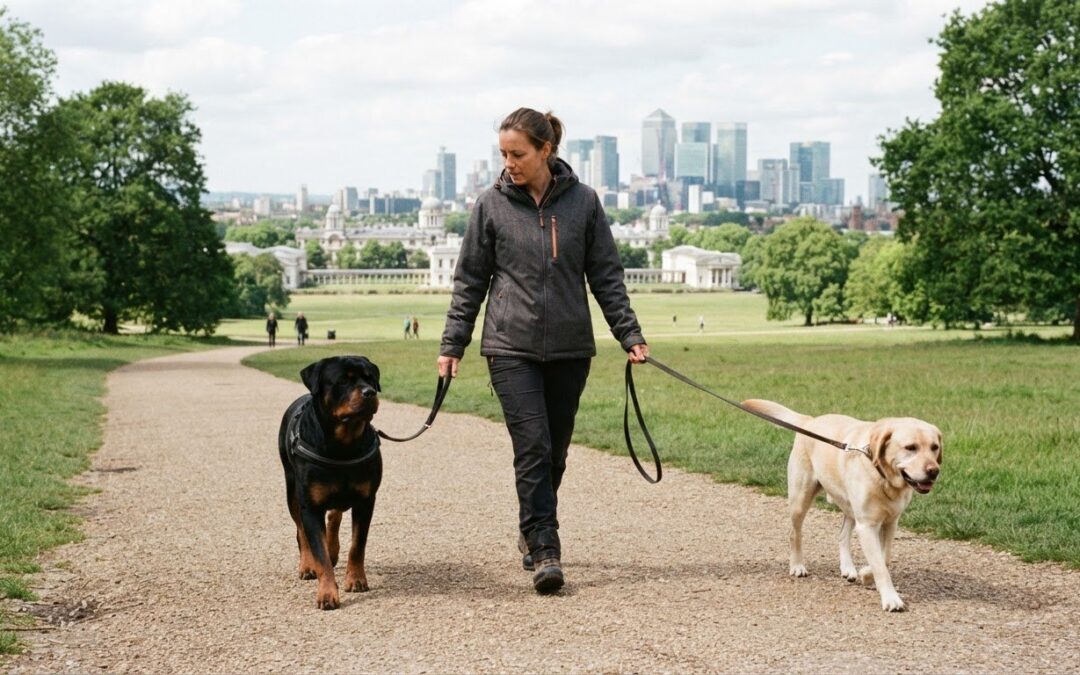
A powerful dog doesn’t need a stronger hand; they need a walk planned around their individual needs. A dog walker for large powerful breeds in London should consider the dog’s size, temperament and excitement triggers, not strength alone. London group walks typically involve two to six dogs with one walker, but the right setting depends on how your dog responds to other dogs and the environment.
It’s understandable to want reassurance that your dog will be handled calmly, especially if busy streets, passing dogs or leaving home can raise their excitement. This guide explains how thoughtful walks can accommodate powerful dogs, support calmer behaviour and help you consider group or individual walking. You’ll also learn how collection and return at home can fit into the arrangement, what helps a walker understand your dog’s cues, and why experience across different breeds and needs matters more than assumptions based on size. The aim is a walk that feels manageable for your dog and gives you confidence in the care around them.
Key Takeaways
- Notice what raises your dog’s excitement so their walk can be shaped around their cues and comfort.
- Match the walking arrangement to your dog’s activity needs and how they respond to busy surroundings.
- Look for handling that takes account of your dog’s temperament and experience, not size alone.
- Consider how collection and return at home can make the walk fit smoothly into your routine.
Managing dogs’ excitement and behaviour
Excitement can build before a walk begins, so notice your dog’s cues from collection onwards. A predictable routine helps the walker plan calmer transitions.
Public Walking Rules and Lead Control
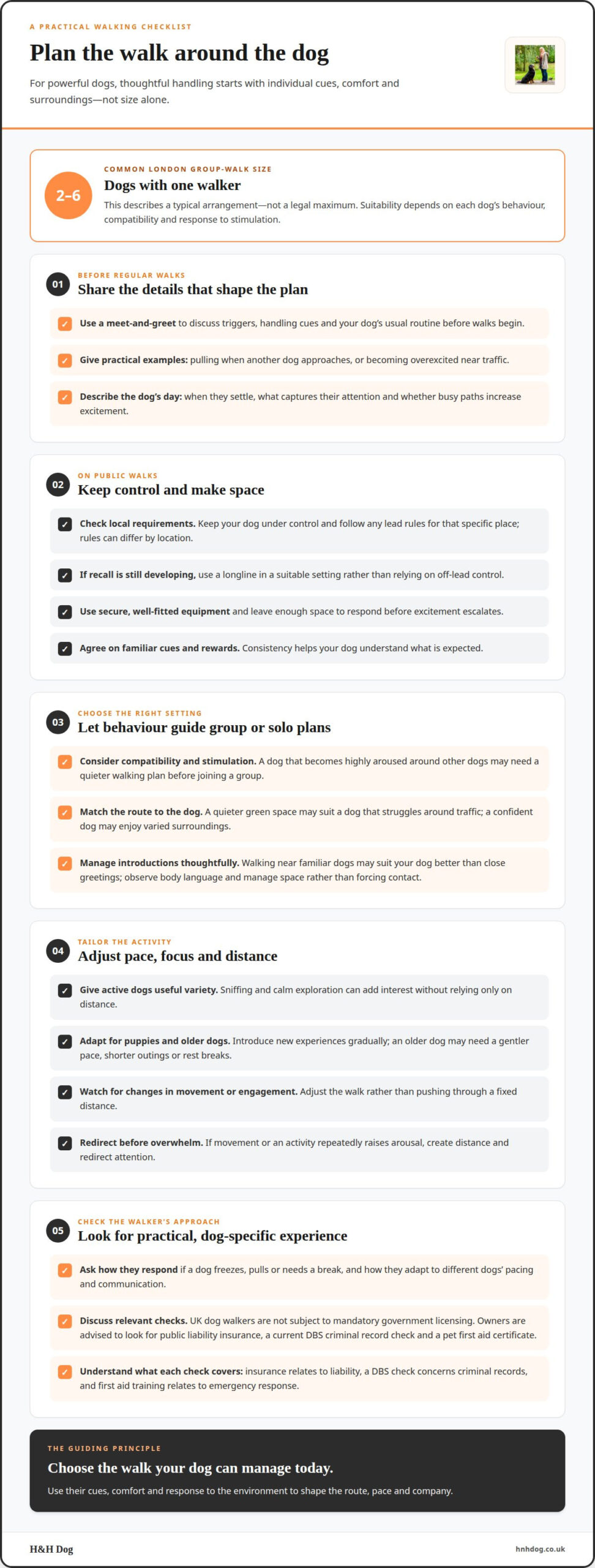
In public, keep your dog under control and follow any lead requirements that apply to the specific place. Rules can differ by location, so route choice and local signs matter. UK dog walkers are not subject to mandatory government licensing. If your dog is still learning reliable recall, use a longline in a suitable setting rather than relying on off-lead control.
Before regular walks, a meet-and-greet gives you, your dog and the walker a chance to discuss triggers, handling cues and the usual routine. Share practical examples, such as pulling when another dog approaches or becoming overexcited near traffic. A good introduction considers how your dog responds to unfamiliar people and dogs, so socialisation can be paced to their comfort rather than assumed from breed or size.
Group Limits and Strong Dog Safety
London group dog walks typically involve two to six dogs with one walker. That describes a common arrangement, not a legal maximum. The suitable group depends on each dog’s behaviour, compatibility and response to stimulation. A strong dog that becomes highly aroused around other dogs may need a quieter walking plan before joining a group.
For safer handling, use secure, well-fitted equipment and leave enough space to respond before excitement escalates. Agree on familiar cues and a reward-based approach; consistency helps your dog understand what is expected. Tailor exercise to the individual: a lively working breed may benefit from sniffing and exploring, while an older dog may need a gentler pace, shorter outings or rest breaks. Notice changes in movement or engagement and adjust the walk rather than pushing through a fixed distance.
Arrangements for active and working breeds
An active dog needs more than a longer route; the walk should give their energy useful direction. For a collie, for example, sniffing opportunities and calm exploration add variety without relying only on distance. A professional dog walker can shape the outing around your dog’s pace, responses and comfort, rather than assuming every working breed needs the same exercise.
Start by describing your dog’s typical day. Note when they settle, what captures their attention and whether busy paths increase excitement. These details help the walker choose a suitable route and pace. A quieter green space may suit a dog that struggles around traffic, while a confident dog may enjoy varied surroundings. The aim is an engaging routine, not constant stimulation.
If your dog pulls towards movement, practise familiar walking cues in less distracting settings before trying busier routes. Rewarding check-ins give your dog a clear way to reconnect with the walker. If an activity, such as chasing birds, repeatedly raises arousal, create distance and redirect attention before your dog becomes overwhelmed. Small adjustments can make exercise more thoughtful and easier to manage.
Puppies and older dogs also need walks tailored to their comfort. A puppy may find new sounds, surfaces and people more demanding than an established route suggests. Introduce these experiences gradually, pausing to observe their response. With an older dog, the walker can watch for a slower pace or reluctance to continue and adapt the outing. Your account of your dog’s normal movement helps identify meaningful changes.
Before walks begin, agree on the dog’s cues, preferred equipment and any known triggers. Keep the routine consistent where possible, while allowing the route to change with the dog’s focus and energy that day. If a group setting suits the dog’s social behaviour, group dog walking can provide a structured way to share an outing while keeping their individual needs in view.
Dog handling experience across breeds and needs
Size alone doesn’t show how a dog will respond on a London pavement. A powerful dog may walk steadily past a bus, then pull towards a familiar friend or react to a sudden noise. Experience matters when a walker notices these changes and adjusts distance, pace or direction. Look for handling that considers your dog’s communication, physical comfort and past experiences, rather than relying on breed stereotypes.
Useful experience is specific. During a booking discussion, the walker can ask how your dog behaves around bicycles, unfamiliar dogs and visitors entering the home. Describe what helps your dog settle, including familiar cues or rewards. For example, a dog that becomes tense near other dogs may need space before any introduction. These details show whether the walker can turn your dog’s individual history into practical decisions outdoors.
In the UK, dog walkers aren’t subject to mandatory government licensing. Owners are advised to look for public liability insurance, a current DBS criminal record check and a pet first aid certificate. These are distinct checks: insurance relates to liability, a DBS check concerns criminal records, and first aid training relates to emergency response.
Ask how the walker adapts their approach to different dogs. A confident adult, a cautious rescue dog and a puppy learning to walk each need different pacing and communication. A suitable walker can explain how they respond if a dog freezes, pulls or needs a break. NARPS UK is the National Association of Registered Pet Sitters; membership alone doesn’t explain how a walker handles your dog, so practical examples still matter.
For group walks, compatibility matters more than making every dog interact. Your dog may enjoy walking near familiar friends but feel unsettled by close greetings. The walker should observe body language and manage space, rather than force contact. Before regular walks, discuss your dog’s triggers, preferred cues and physical needs. Relevant experience shows in a thoughtful plan that reflects those details and adapts when your dog’s behaviour changes.
Which London dog walkers specialise in large or powerful breeds?
Choosing a dog walker for large, powerful breeds in London means looking beyond weight or breed labels. A strong Labrador and a strong German Shepherd may differ in confidence, pace and response to other dogs. Relevant experience means noticing those differences and adapting the route and walking arrangement to the individual. The useful question is how the walker responds to your dog’s behaviour, not whether they claim expertise in one breed.
London group walks typically involve two to six dogs with one walker, but a familiar group may suit one dog better than another. A dog that feels relaxed beside known companions may enjoy a shared outing; a dog unsettled by unfamiliar dogs may need more space. Compatibility and behaviour should guide group selection, rather than grouping dogs simply by size.
Before regular bookings, a meet-and-greet or trial walk gives you a chance to explain your dog’s routine and lets the walker observe their responses during collection and on the lead. For example, a dog that pulls towards cyclists needs a route plan that accounts for that trigger.
A dog walker for large, powerful breeds in London should explain how they adapt handling to the dog in front of them. Discuss familiar cues, reward-based methods and what the walker would do if excitement rises. For a dog still learning reliable recall, a longline can support practice in a suitable setting. The plan should also reflect your dog’s age, exercise needs and comfort.
Collection and return at home can make walks fit your routine, while giving the dog a familiar start and finish. A clear handover helps the walker understand any changes in energy or behaviour before setting out. To discuss a walking arrangement shaped around your dog, explore dog walking options.
H&H Dog
H&H Dog offers Group Dog Walking for owners seeking regular exercise and care that recognises their dog’s individual needs. If your dog is large, powerful, easily excited or simply has a distinctive temperament, share what helps them feel comfortable, including familiar cues, walking habits and situations they find difficult. These details give useful context for considering a suitable walking arrangement.
A group walk may suit a dog who enjoys company, while another may need a different approach to feel settled. The decision should reflect your dog’s behaviour and welfare, not size alone. Contact H&H Dog to discuss your dog’s walking needs and routine.
Make the next walk a better fit
Choosing a dog walker for large, powerful breeds in London is ultimately about finding an approach that respects your dog’s character, not just their strength. Make a note of what helps your dog feel settled, what tends to unsettle them and what you hope their walks will provide. Those observations are a useful starting point for discussing care that fits your dog and household routine.
H&H Dog offers dog walking alongside other care options, including Full Groom, Bath & Brush and Puppy’s First Groom. If you’re considering support with walks, share your dog’s needs and the situations you’d like the walker to understand. A clear conversation can help you decide whether the arrangement feels right for both of you.
Contact H&H Dog about your dog and take the next step towards walks shaped around their wellbeing.
Frequently Asked Questions
Looking for a Dog Walker In London?
H&H Dog provides dog walking in NW1-NW8, NW11, N2, N3, N6 and W9. The service includes collection and drop-off within its designated walking areas. When arranging walks, share your dog’s usual routine and the parts of London they find difficult, such as busy pavements or close encounters with other dogs. This helps inform a walking plan suited to your dog.
How much does a dog walker for a large dog cost in London?
The cost depends on the walking arrangement and is provided after a quote request. H&H Dog charges per outing for individual or group walking sessions. To describe what you need, include the preferred walking format, how often you’re seeking walks and the collection area. Those details clarify the service being requested without assuming that every large dog needs the same arrangement.
Do London dog walkers charge extra for large or challenging dogs?
Breed or size alone doesn’t establish whether an additional charge applies. Walking fees can relate to the arrangement, such as an individual outing or a group session. Explain what makes your dog’s walks challenging, such as pulling towards traffic or needing extra space around other dogs. That gives a clearer basis for discussing the appropriate service than relying on breed labels.
How can I check reviews, references and insurance before hiring a London dog walker?
Read reviews for specific examples of communication, reliability and handling in situations like yours. References can add context about a walker’s experience with dogs who pull or feel uneasy around others. For insurance, review the policy documents for the named insured party, cover type and period. Keep the details with your booking information, so you know which arrangements were discussed.
What should a meet-and-greet or trial walk cover for a powerful dog?
Use the meeting to see how the walker manages the handover and responds to your dog’s movement on lead. A short trial can show whether your dog remains engaged on a quieter route before encountering busier surroundings. Agree on what the walker should do if your dog pulls, becomes unsettled or needs a pause. Observe whether they can recover and re-engage.
Which London areas have dog walkers experienced with breeds such as German Shepherds, Rottweilers or mastiffs?
H&H Dog’s walking service covers NW1-NW8, NW11, N2, N3, N6 and W9. The postcode areas identify where the walking service operates; they don’t, by themselves, describe experience with a particular breed. If you have a German Shepherd, Rottweiler or mastiff, explain their walking habits and handling needs when discussing an arrangement, so the dog’s individual temperament stays central.