
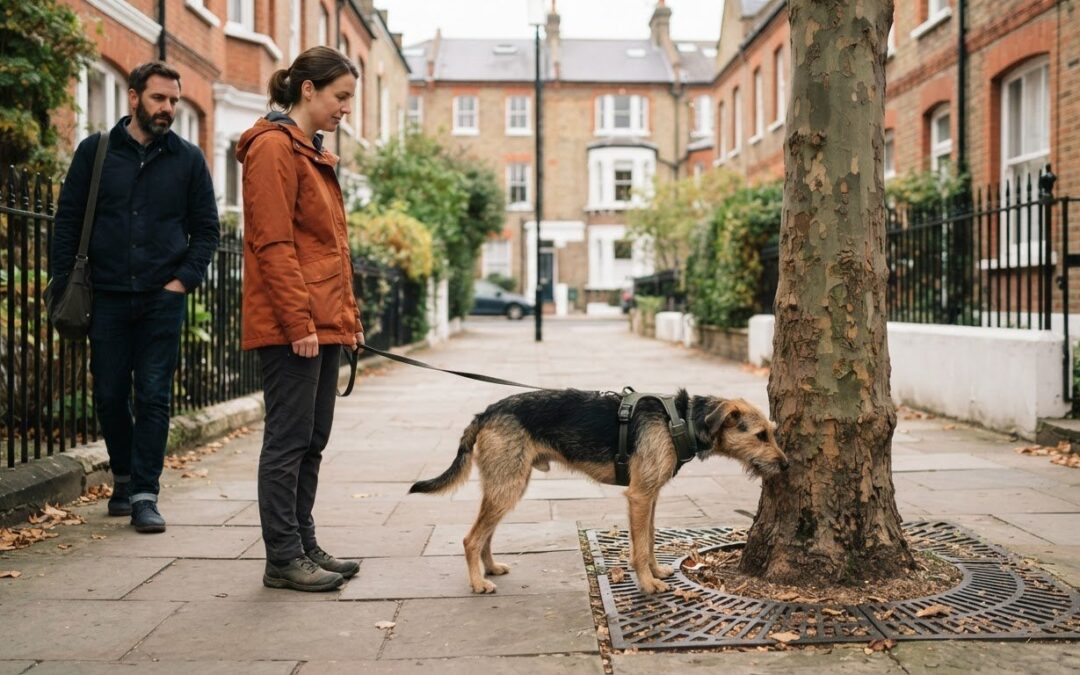
Finding a dog walker for a rescue dog means choosing someone whose experience and approach suit your dog’s comfort, behaviour and physical needs. Arrange a calm introduction and a one-to-one trial walk before considering group walks. Set a duration that reflects your dog’s age, health, confidence and stamina, rather than assuming every dog needs the same length of walk.
It’s understandable to feel protective when someone new will care for a dog who may still be settling in. Build the match gradually, paying attention to how your dog responds, not just how far they walk. This guide explains what to look for in a walker, how to make introductions and trial walks manageable, and how to choose a duration that supports your dog’s wellbeing. You’ll also learn how to adjust the plan if your dog needs more time, space or familiarity before walks become part of their routine.
Key Takeaways
- Look for a walker who can respond calmly to your dog’s history, confidence and behaviour, rather than relying on rescue experience as a label alone.
- Match the walker to your dog’s temperament, walking style and support needs so the routine feels manageable for both of you.
- Introduce the walker gradually and use a one-to-one trial before considering group walks; watch your dog’s comfort and communication throughout.
- Choose walk length according to your dog’s age, health, stamina and conditions, then adjust the plan when their needs change.
Experience with rescue and foreign rescue dogs
Experience matters when it matches the support your dog needs. In London, look for practical examples of calm, individual handling.
Rescue Dog Experience
Finding a dog walker for a rescue dog starts with asking about relevant experience, not making assumptions based on the rescue label. If your dog came from overseas, share what you know about their history and current triggers. Ask how the walker adapts if a dog is wary of people or reactive towards some dogs. Rachael has provided one-to-one sessions for Rex when he was extremely nervous of people and reactive towards some dogs.
Ask about the founder’s and team’s direct experience, too. Rachael has personally fostered over 500 dogs and rescued 28 dogs in Romania. Lianne held a role on a rescue’s homing team for over eight years. Team members’ experience owning dogs can also show familiarity with everyday care. For example, Rachael’s dog Angel is 6 years old, while Lianne’s Holly is 8 and Teddy is 7.
Questions for Prospective Walkers
Ask how they would respond to your dog’s specific needs, what they’d do if your dog became distressed, and how they’d keep walks manageable. For finding a dog walker for a rescue dog, request local recommendations from the rescue organisation that rehomed your dog, then use reputable UK pet-care directories to find nearby options. Ask for a reference from an owner whose dog has similar needs.
Physical fitness and dog-handling experience matter, particularly if a dog pulls or needs careful handling. Dogs Trust says off-site dog-walking volunteers need experience handling dogs and good physical fitness to walk and manage dogs of different shapes, sizes and strengths. Ask the walker for a specific example of handling a strong dog while keeping them comfortable and secure.
Matching dogs to walkers according to their needs
Choose a walker whose routine suits your dog’s confidence, behaviour and physical needs. The arrangement can change as your dog settles.
One-to-One or Group Walks
For a newly adopted dog, one-to-one walks can offer a quieter setting to learn the walker’s cues and explore familiar routes. Group walks may suit a dog who is comfortable around other dogs and can manage shared attention. Base your decision on your dog’s observed responses, not assumptions about rescue dogs.
Notice whether your dog stays engaged, seeks distance or becomes overwhelmed around other animals. If group walking becomes appropriate, a gradual transition can help protect their sense of safety. You can explore Group Dog Walking as an option once your dog is ready for shared walks.
References, Insurance and DBS Status
Ask for references from people whose dogs have similar needs, then ask what the walker did in specific situations. Request details of their insurance, including whether it covers the loss or theft of keys in their possession. Ask what DBS check they hold and how it relates to the work. A check does not replace relevant experience or references.
For walking arrangements, agree how the walker will manage leads, routes and collection. Off-site walkers must follow the rehoming centre’s protocols for collection, routes and exercise compounds where applicable. Most dog-walking insurance companies will not cover one person walking more than 6 dogs, so treat that as an insurance limit, not a legal maximum.
A walker’s price depends on the dog’s needs, walk arrangement and service details; the price is given after a quote request.
Safety Information and Equipment
Give the walker a written care sheet covering your dog’s triggers, handling preferences, recall response and emergency contact details. Explain what helps if your dog freezes, pulls away or becomes distressed, and identify routes or situations to avoid. Include any health or mobility needs that affect their walks.
Provide the walking equipment your dog already uses, such as their familiar lead, harness or collar, and show the walker how it fits. Agree which equipment they’ll use and how they’ll keep your dog secure during handovers. Clear, consistent instructions help the walker respond to your dog as an individual.
Trial walks and introductions
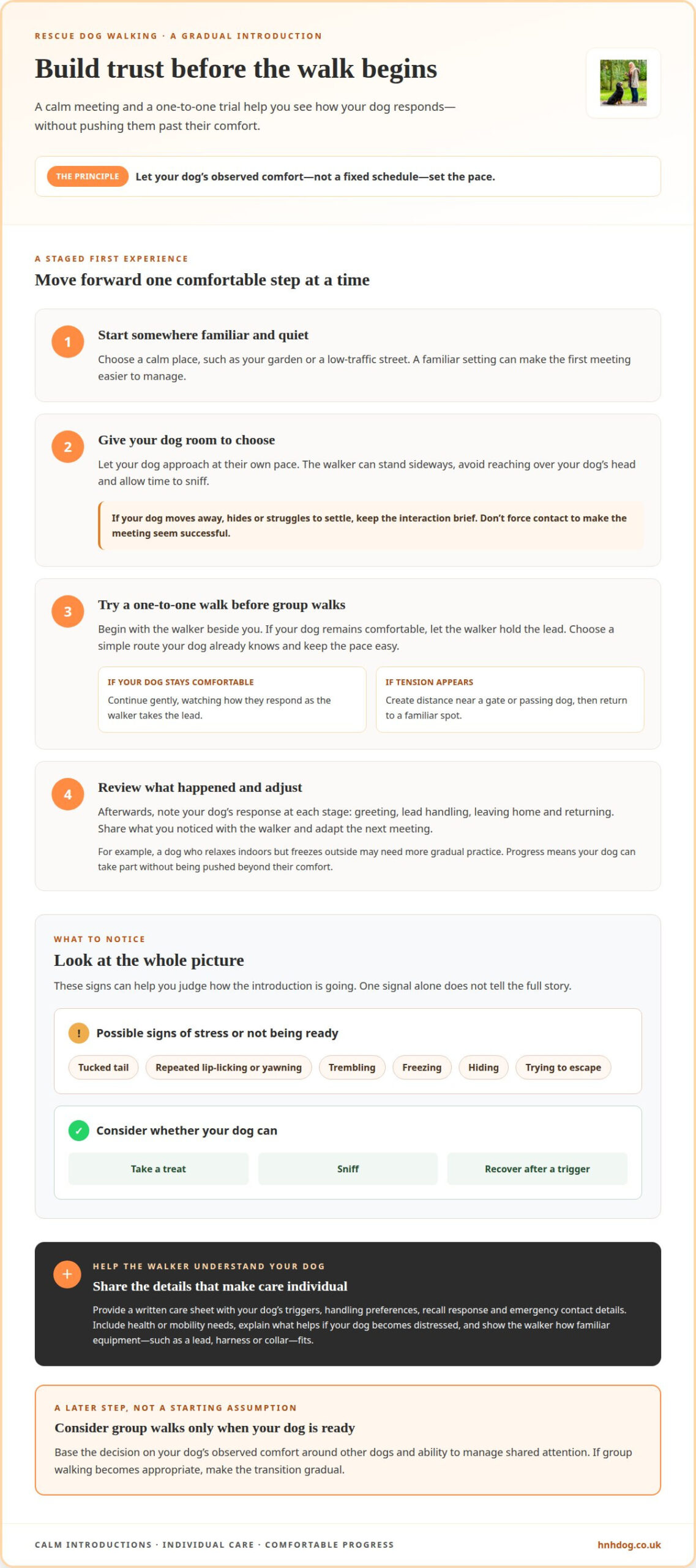
Plan the first meeting around your dog’s comfort rather than a fixed schedule. A calm introduction lets you see how the walker responds to your dog’s signals before walks become part of their routine.
Start somewhere familiar and quiet, such as your garden or a low-traffic street. Let your dog approach at their own pace. The walker can stand sideways, avoid reaching over your dog’s head and give them time to sniff. Keep the first interaction brief if your dog moves away, hides or struggles to settle. Don’t force contact just to make the meeting seem successful.
A one-to-one trial with the walker is ideal before your dog joins group walks. Start with the walker beside you, then let them hold the lead if your dog remains comfortable. Choose a simple route your dog already knows and keep the pace easy. If your dog becomes tense near a gate or passing dog, create distance and return to a familiar spot.
Watch for signs your dog may be stressed or not ready, such as a tucked tail, repeated lip-licking or yawning, trembling, freezing, hiding or trying to escape. Consider the whole picture, including whether your dog can take a treat, sniff and recover after a trigger. One signal alone does not tell the full story.
Afterwards, note what happened at each stage: greeting, lead handling, leaving home and returning. A dog who relaxes indoors but freezes outside may need more gradual practice. Share your observations with the walker and adjust the next meeting accordingly. If the rehoming centre has protocols for collection, walking routes or exercise compounds, make sure the walker follows them. Progress means your dog can take part without being pushed beyond their comfort.
Walk duration suited to the dog’s needs
There’s no single walk length that suits every rescue dog. Set the duration according to your dog’s age, health, stamina and confidence, as well as the conditions outside. Adjust it based on how your dog copes.
For an elderly dog, a 20-minute walk around the block may be more suitable than a longer outing. Your dog’s pace, willingness to continue and recovery afterwards all help show whether the walk is manageable. If they slow down, seek to return home or seem unsettled afterwards, discuss a shorter or quieter outing with the walker. A relaxed sniff around a familiar route can be more useful than covering extra ground.
Weather can change the plan. In hot weather, limit an outing to a maximum of 20 minutes when your dog has to go outside. Keep dogs indoors and cool between 11am and 3pm, when the hottest part of the day usually coincides with dog-walking times. Avoid street walks if pavements may be too hot for your dog’s paws. A brief toilet break in a cooler, safe spot may be more appropriate than a usual route.
Build a walking routine around your dog’s responses, not a target distance. Tell the walker what signs of fatigue or stress to look for, and agree how they’ll shorten or change the route. For example, a dog who enjoys a familiar park but becomes anxious on busy streets may do better with a calm loop than a longer urban walk.
Your schedule matters too. If you need to leave your dog for more than 4 hours at a time, consider whether a walker can provide a suitable break. Match that visit to your dog’s comfort and energy, rather than assuming it must be a long exercise session. Explore dog-walking support to consider how a walking routine could fit your dog’s needs.
H&H Dog: Full Groom
H&H Dog provides Group Dog Walking, with walks tailored to each dog’s fitness and personality. Group walks suit dogs who are comfortable sharing their walk with others. A Full Groom is a separate grooming service, not walking care. Choose the support that fits your dog’s needs: a walk offers exercise and outdoor time, while grooming takes care of their coat.
If your dog is comfortable around other dogs, H&H Dog’s Group Dog Walking may suit their routine. If they aren’t ready for shared walks, prioritise their comfort and build familiarity at their own pace. Choose Full Groom when your dog needs grooming rather than help with walks.
For information about these services, contact H&H Dog or visit hnhdog.co.uk.
Take the next step at your dog’s pace
Your dog’s relationship with their walker develops through everyday experiences, not one perfect first meeting. Notice what helps your dog feel settled, and share changes in their routine or responses. Ongoing communication lets you refine the arrangement as your dog grows more comfortable. Finding a dog walker for a rescue dog isn’t about fitting them into a standard routine; it’s about building care around the individual dog.
If grooming is also on your list, H&H Dog offers Bath & Brush and Puppy’s First Groom, as well as Full Groom. These are separate from walking, so choose the service that matches your dog’s current needs.
For a conversation about care options, contact H&H Dog. Each thoughtful step helps create a more secure shared life with your dog.
Frequently Asked Questions
How to find a dog walker experienced with rescue dogs in the UK?
Use local rescue organisations and UK pet-care directories to create a shortlist, then compare walkers’ experience with your dog’s specific needs. For a London search, narrow the options to your area and check that the walker serves your postcode. Before arranging a meeting, request a reference from a client with a similar dog and ask what the walker did to make care feel safe and predictable.
What qualifications or experience should a dog walker have for nervous or reactive rescue dogs?
Prioritise practical handling experience and a calm approach over a qualification title alone. Ask for a specific example of supporting a dog who barked, froze or needed distance from other dogs, and how the walker adapted. A pet first aid course is also worth considering. Their explanation should focus on avoiding pressure and keeping your dog and others safe.
What should a gradual introduction and trial walk with a rescue dog involve?
Start with a quiet handover and let your dog decide whether to approach the walker. If they seem settled, practise handing over the lead before taking a short route your dog already knows. Agree on a simple update afterwards, including anything that unsettled your dog and how they behaved at home. Use that feedback to shape the next outing rather than automatically making it more challenging.