
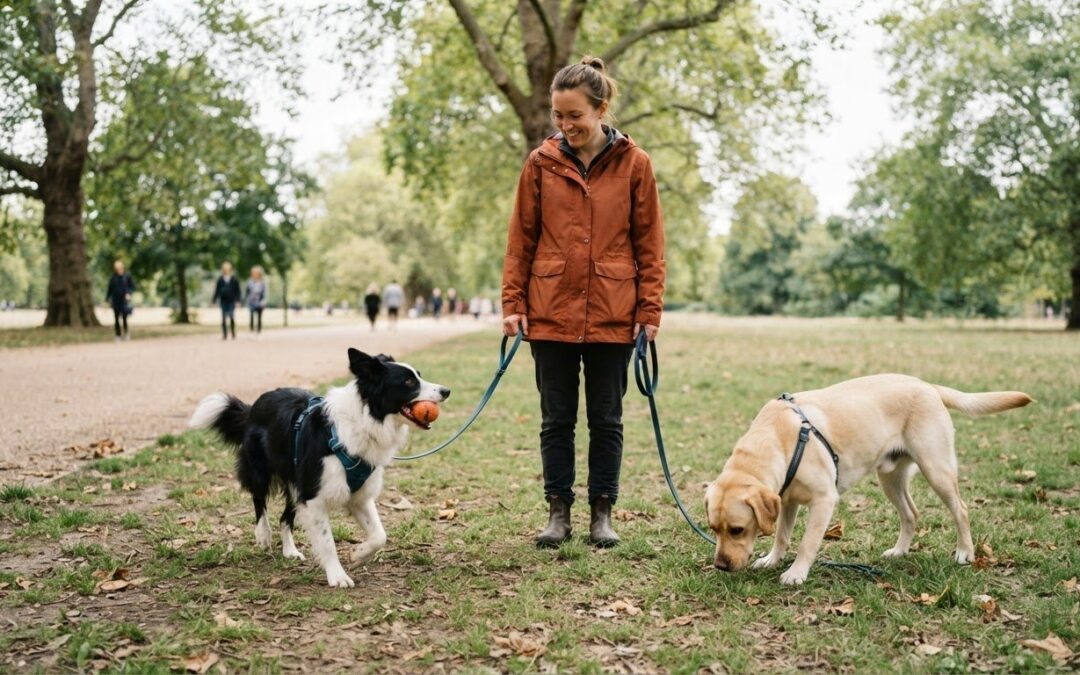
A high-energy breed needs more than a longer walk. Dogs generally need 30 minutes to two hours of moderate- to high-intensity activity each day, and how much exercise your dog needs by breed depends on factors such as age, health and individual stamina. The right routine balances movement with rest, rather than pushing every dog to the same target.
If you’re wondering whether your dog gets enough exercise, you’re not alone. Breed guidelines offer a useful starting point, but they don’t account for your dog’s individual needs. Too little activity can leave a dog under-stimulated, while too much may be tiring or unsuitable, particularly for puppies, older dogs and flat-faced breeds.
This guide covers typical daily exercise needs by breed, ways to divide activity into shorter sessions, and how movement and enrichment support your dog’s wellbeing. You’ll also learn why high-energy breeds often need a varied routine, with a little more planning.
Key Takeaways
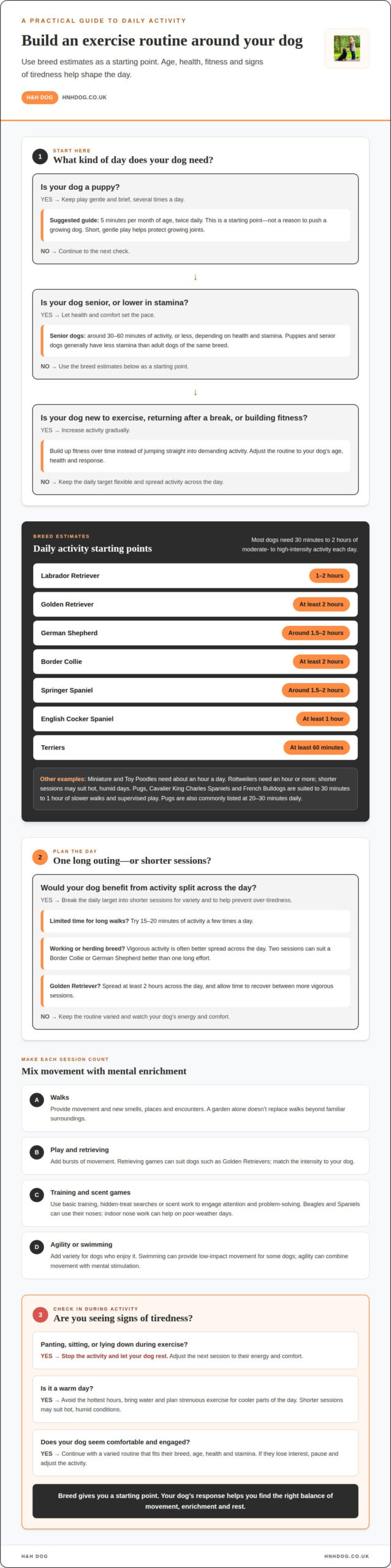
- Use breed needs as a guide: Labradors typically need 1-2 hours of daily exercise, while Border Collies need at least 2 hours across the day.
- Divide activity into shorter sessions to add variety and reduce the chance of over-tiring your dog; keep puppy play gentle and brief.
- Combine movement with mental enrichment, such as scent games or basic training, to engage your dog when outdoor exercise isn’t practical.
- High-energy breeds can make rewarding companions for an active routine, but their exercise needs call for consistency, variety and gradual increases in fitness.
Breaking activity into shorter sessions
A daily exercise target doesn’t need to mean one long outing. Shorter sessions can add variety and help prevent over-tiredness. For example, a dog with limited time for long walks can have 15-20 minutes of activity a few times a day. Mix walking with playing, training or sniffing games to engage both body and mind.
Breed and age affect both the amount of exercise and how you divide it. Miniature and Toy Poodles need about an hour a day, which you can split into shorter sessions. Rottweilers need an hour or more, with shorter sessions on hot, humid days. Puppies and senior dogs generally have less stamina than adult dogs of the same breed. Keep puppy play gentle and brief, several times a day, to protect growing joints.
Working and herding breeds often need vigorous activity spread across the day. A Border Collie needs at least two hours, while German Shepherds are recommended around 1.5-2 hours. Two sessions can suit these dogs better than one long effort. Increase activity gradually if your dog is new to exercise, returning after a break, or building fitness.
Choose activities that tap into a working or hunting dog’s natural interests. Training games, retrieving and agility can combine movement with mental stimulation. Scent work lets a Beagle or Spaniel use its nose, while walks provide changing smells and surroundings. Swimming can add variety. Match the intensity to your dog’s age, health and response.
Golden Retrievers need at least two hours of exercise spread across the day. Regular activity can help maintain a healthy weight, so build movement into a consistent routine instead of relying on occasional strenuous outings. Combine walks with retrieving or training games, and allow time to recover between more vigorous sessions.
Pay attention to your dog, not just the clock. Panting, sitting or lying down during exercise can be signs of tiredness. Stop the activity and let your dog rest if you notice them. On warm days, bring water and plan strenuous exercise for cooler parts of the day. Adjust the next session to your dog’s energy and comfort.
Daily exercise needs for herding and sporting dogs
Working and sporting breeds often need sustained activity, but daily totals are starting points. Breed, age, fitness and health all shape a suitable routine.
Daily Walks and Dog Health
Daily walks provide physical activity and mental stimulation through new smells, places and encounters. Regular exercise helps dogs stay fit and maintain a healthy weight, while exploring keeps their minds engaged. A garden alone doesn’t replace walks: even a terrier benefits from exploring beyond familiar surroundings. For herding breeds, walking can complement more vigorous activity without making every session intense.
Breed-Specific Exercise Estimates
Exercise estimates show how breed tendencies can guide a daily routine. Labrador Retrievers need 1-2 hours of exercise per day; Golden Retrievers need at least 2 hours spread across the day. German Shepherds are recommended around 1.5-2 hours, while Border Collies need at least 2 hours. Springer Spaniels need around 1.5-2 hours, and English Cocker Spaniels need at least 1 hour. Terriers need at least 60 minutes daily. Split demanding activity into sessions, and include varied movement rather than relying only on walking or hiking.
Individual Differences in Exercise Needs
Breed estimates need adjusting for each dog’s age, health, preferences and stamina. Companion breeds such as Pugs, Cavalier King Charles Spaniels and French Bulldogs are suited to 30 minutes to 1 hour of slower walks and supervised play; Pugs are also commonly listed at 20-30 minutes daily. Puppies need gentle, short play: a suggested guide is 5 minutes per month of age, twice daily. This is a starting point, not a reason to push a growing dog.
Senior dogs may need 30-60 minutes of activity, or less, depending on health and stamina. A dog returning to exercise should build fitness gradually. In hot weather, avoid the hottest hours; illness or injury can reduce exercise needs, and recovery should follow veterinary advice.
Exercise benefits for physical and mental wellbeing
Exercise supports fitness and mental engagement, so a balanced day involves more than walking. Divide your dog’s activity between walks, play and training, and adjust the mix to their breed, energy and response.
Mental Stimulation Alongside Exercise
Mental stimulation gives dogs worthwhile challenges alongside physical activity. A Labrador can search for hidden treats, while a German Shepherd can practise finding a toy by scent. These games engage attention and problem-solving as well as the body. On poor-weather days, indoor nose work or basic training provides an outlet without a long outdoor session. Keep tasks manageable and let your dog pause if they lose interest.
High-energy dogs can benefit from varied enrichment, such as agility, retrieving and scent work. A Border Collie might practise a short sequence of cues before a sniffing game, combining focus with movement. Variety matters: repeating one intense activity can tire a dog physically without providing the same range of mental challenges.
Balancing Walks, Play, and Training
Walks, play and training offer different ways to meet a dog’s activity needs. A walk provides movement and new smells; fetch adds bursts of running; training practises attention and communication. Use all three throughout the day rather than expecting one activity to meet every need. The right balance depends on your dog’s breed, age, health and enjoyment.
For example, a young, energetic dog might have a purposeful walk, a retrieving game and a short training session. A senior dog may prefer a leisurely walk, gentle play and simple cues. Swimming can provide low-impact movement for some dogs, while interactive toys make indoor play more engaging. Watch for panting, sitting or lying down, and stop when your dog shows signs of tiredness.
Regular movement helps dogs maintain a healthy weight and may help reduce the risk of arthritis and diabetes. If weather or recovery from illness limits outdoor activity, try indoor fetch, nose work or basic training. Keep exercise consistent, and build it up gradually after a break so you don’t place sudden demands on your dog’s fitness.
Benefits and drawbacks of high-exercise breeds
A high-exercise dog can be a rewarding companion for walking, hiking and active play. A Springer Spaniel may enjoy retrieving games, while a Border Collie can thrive on activities that combine movement with problem-solving. Meeting these needs gives dogs regular outlets for energy and creates opportunities to spend time together.
That enthusiasm also brings practical demands. High-energy breeds need consistent activity, not occasional bursts of exercise at weekends. Their routine may include walks, play and training, with enough variety to keep them engaged. If your daily plans are unpredictable, meeting your dog’s activity needs can be harder, and their behaviour at home may be affected.
More exercise isn’t automatically better. Too much activity can harm dogs, particularly puppies and large breeds: growing joints need protection, and giant breeds may develop lameness issues, including arthritis, with excessive exercise. Build fitness gradually when starting a new activity or returning after a break. For puppies, choose short, gentle play instead of strenuous, repetitive exercise.
Choose activity for the dog in front of you. A Springer Spaniel may enjoy retrieving, but repeated fast-paced games aren’t the only way to engage them. Training games and scent work add mental challenges without making every activity physically intense. For large or giant breeds, steady walks and low-impact activities may suit better than frequent high-impact exercise.
The key benefit is a routine that meets both physical and behavioural needs; the drawback is the time and consistency it requires. Consider your dog’s age, health, fitness and response when adjusting activity. If exercise needs are contributing to behaviour challenges, discuss your dog’s behaviour for tailored support.
H&H Dog
H&H Dog can help with practical parts of your dog’s care routine when exercise, age or temperament makes planning a challenge. Group Dog Walking provides an option for regular activity, and Puppy Training supports positive learning through short sessions. These services complement your own routine: exercise still needs to suit your dog’s breed, health and energy.
If you’re unsure how to fit activity around your dog’s needs, consider what support would be most useful. H&H Dog also offers Puppy’s First Groom, Full Groom and Bath & Brush as part of its personalised dog care services.
Contact H&H Dog to discuss the support that suits your dog and your routine.
Make your dog’s routine work for both of you
Knowing how much exercise your dog needs by breed gives you a useful starting point. Next, notice how your dog responds to their routine. Look for patterns in their energy, interest in play and ability to settle afterwards. These everyday cues help you shape activity around your dog instead of following a breed estimate rigidly.
Make changes gradually and keep them practical. If walks are difficult to fit into your schedule, or you’re unsure how to adapt activity to your dog’s temperament, tailored support can help you plan a manageable routine. Your dog’s needs may change with age, health and fitness, so review the routine as they do.
Contact H&H Dog for exercise advice and talk through what could work for your dog. A thoughtful routine starts with understanding the individual beside you, and small, responsive changes can help you build one together.
Frequently Asked Questions
How much exercise does my dog need?
Most dogs need around 30 minutes to two hours of moderate- to high-intensity activity daily. The answer to how much exercise your dog needs by breed depends on age, health, fitness and the type of activity. A lively walk, sniffing time and play can contribute differently from steady running. Watch how your dog responds during and after activity, then adjust the routine to suit them.
Can I just let my dog run in the garden?
No. Garden time is useful, but it doesn’t replace regular walks. Walking gives your dog access to new smells, places and everyday experiences beyond familiar surroundings. A short route along a different street or through a green space, for example, can offer variety the garden cannot. Treat garden play as a useful extra, not the whole activity plan.
Have You Been Walking Your Dog Wrong This Whole Time?
Probably not. A good walk isn’t measured only by distance or speed. Letting your dog pause to sniff and explore can make an outing more engaging than marching along the same route. If your dog pulls, seems overwhelmed or appears tired, adjust the pace or surroundings. A comfortable walk responds to your dog’s behaviour instead of following a rigid routine.
How much daily exercise do different dog breeds need in the UK?
Breed estimates vary: Cockapoos need at least 1 hour daily, Dachshunds typically need 30-60 minutes, and Staffordshire Bull Terriers around 1.5 hours. Pugs are often listed at 20-30 minutes daily, while Greyhounds generally need 30-60 minutes, including walks and brief free running. These examples offer a starting point; age, health and stamina affect the routine that suits each dog.
What are typical exercise needs by breed size and energy level?
Size alone doesn’t determine exercise needs. Giant breeds such as Great Danes and Bernese Mountain Dogs are recommended 30-60 minutes of steady walking and low-impact activity, while energetic sporting breeds can need longer, more varied exercise. A German Shorthaired Pointer needs two hours of varied daily activity. Match intensity to your dog’s build, stamina and comfort rather than assuming a larger dog needs more.
Which dog breeds need the most daily exercise?
High-energy working, herding and sporting breeds often need substantial daily activity. Border Collies need at least two hours across the day, German Shorthaired Pointers need two hours of varied exercise, and Golden Retrievers need at least two hours spread across the day. These breeds also benefit from activities that engage their attention, such as retrieving or training games, rather than repetitive exercise alone.