
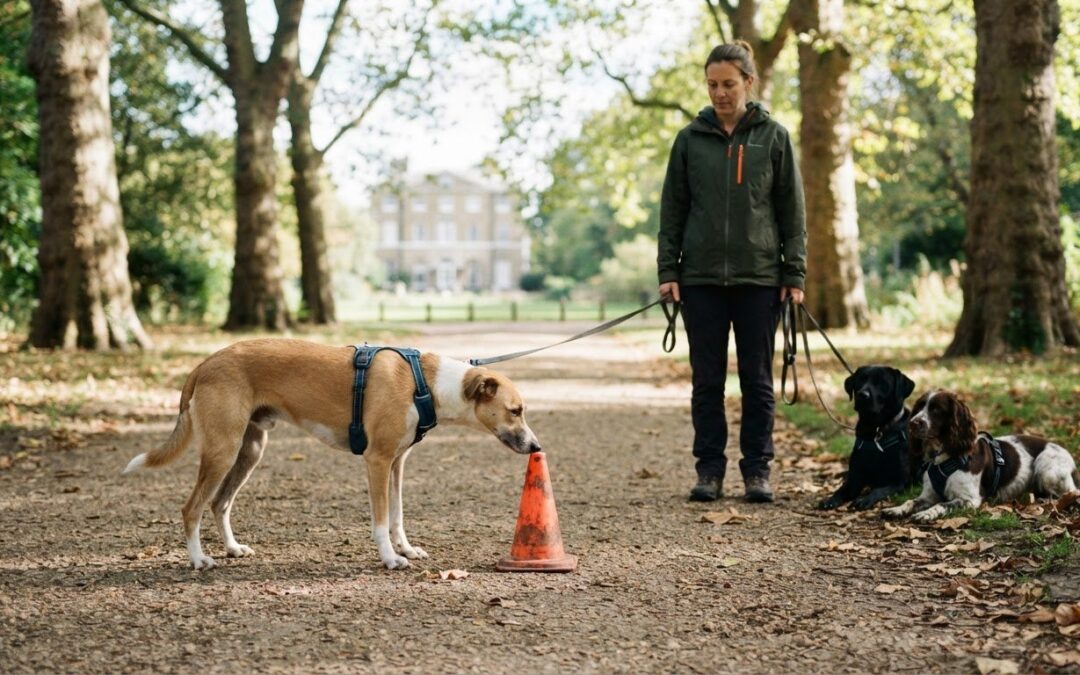
Confidence isn’t built by pushing a nervous dog to “get used to it”. Learning how to build confidence in a nervous rescue dog means creating a sense of safety, keeping experiences manageable and rewarding small signs of curiosity or calm. Give your dog room to approach at their own pace, especially around people, dogs or other triggers.
It’s understandable to want to help when your dog hides, freezes or seems unsure of everyday life. Progress can be gradual, and a naturally shy dog may never become outgoing, but patient, predictable support can help them feel safer. Establish reassuring routines, use gentle reward-based training and learn to spot when your dog is too close to a trigger, so you can adjust before their worry builds.
Key Takeaways
- Let your dog investigate unfamiliar objects, such as a cone, voluntarily, and reward curiosity without rushing them.
- Use steady daily routines to make home life more predictable, and notice which patterns help your dog settle.
- Make walks easier by choosing quieter routes and creating space when your dog feels worried.
- Watch for signs of tension, such as freezing or turning away, and increase distance before your dog becomes overwhelmed.
1. Can you train a dog to be more confident?
Yes. Gradual, reward-based training can help a nervous dog feel safer, although a naturally shy dog may remain reserved. Build trust through manageable experiences, and let your dog choose whether to approach rather than forcing interaction.
UK behaviourist fees vary with the situation, including the support needed and the work involved. The cost depends on the case and is given after a quote request. Look for relevant behaviour qualifications, continued learning, and force-free methods; ask how the practitioner assesses fear and adapts training to each dog.
There’s no fixed timetable for building confidence. A rescue dog may need weeks or months of consistent training and careful management, depending on their history, triggers and ability to settle.
Positive reinforcement helps your dog associate new experiences with something pleasant. Reward small efforts, such as looking towards an unfamiliar object or choosing to move closer, and stop if your dog becomes worried. To build confidence in a nervous rescue dog, make each step easy enough to manage without pressure.
Try a cone game in a familiar, quiet space. Place a cone on the floor and let your dog decide whether to investigate. Reward a glance, sniff or voluntary step towards it. Don’t push the cone towards your dog or rush them. If they move away, give them space and try again later.
Introduce a muzzle gradually, building positive associations rather than using restraint or force. First, let your dog notice the muzzle and reward calm curiosity. Then reward them for moving their nose towards it, followed by choosing to place their nose inside. Keep practice comfortable and pause if they pull away. Never use a muzzle to push a dog into a frightening situation.
For target training with people, begin by holding out a hand at a comfortable distance. Reward your dog for choosing to sniff, lick or touch it, then let them move away. Giving your dog a clear choice makes social experiences more predictable.
2. How Do I Build Confidence in a Rescue Dog?
A predictable routine helps a rescue dog understand what happens next. Set regular times for meals, toilet breaks, walks and quiet rest, then keep the sequence steady while your dog settles. Familiar patterns can reduce uncertainty, which may otherwise contribute to fearful behaviour or anxiety.
During the first three months, keep a settling-in diary of your dog’s likes, dislikes, behaviour and eating habits. Note practical details, such as whether the doorbell interrupts a nap or whether your dog eats more comfortably after a quiet toilet break. These observations can help you spot patterns and adapt the routine to your dog’s needs.
Give your dog a quiet resting place in a low-traffic area. A bed or crate can provide a safe den if your dog is comfortable using it; let them rest there undisturbed. Build a consistent evening routine and provide regular opportunities to sleep during the day. Rest matters because a tired dog may find ordinary experiences harder to manage.
Keep new experiences simple. Introduce one change at a time, such as a different walking route, and let your dog explore at their own pace. Food enrichment can encourage exploration without requiring constant interaction. If your dog chooses to play, keep it voluntary and stop when they move away or lose interest.
To help your dog feel more comfortable when left alone, begin with brief separations that don’t trigger distress, then build up gradually. If separation anxiety is present, staying nearby on the first night and gradually moving farther away may ease the transition. Don’t leave a fearful dog to panic. If they show distress, make the next step easier.
If anxiety persists, a tailored behavioural consultation can help you shape a routine and gradual plan around your dog’s behaviour.
3. How to Help an Anxious Rescue Dog Feel Safe
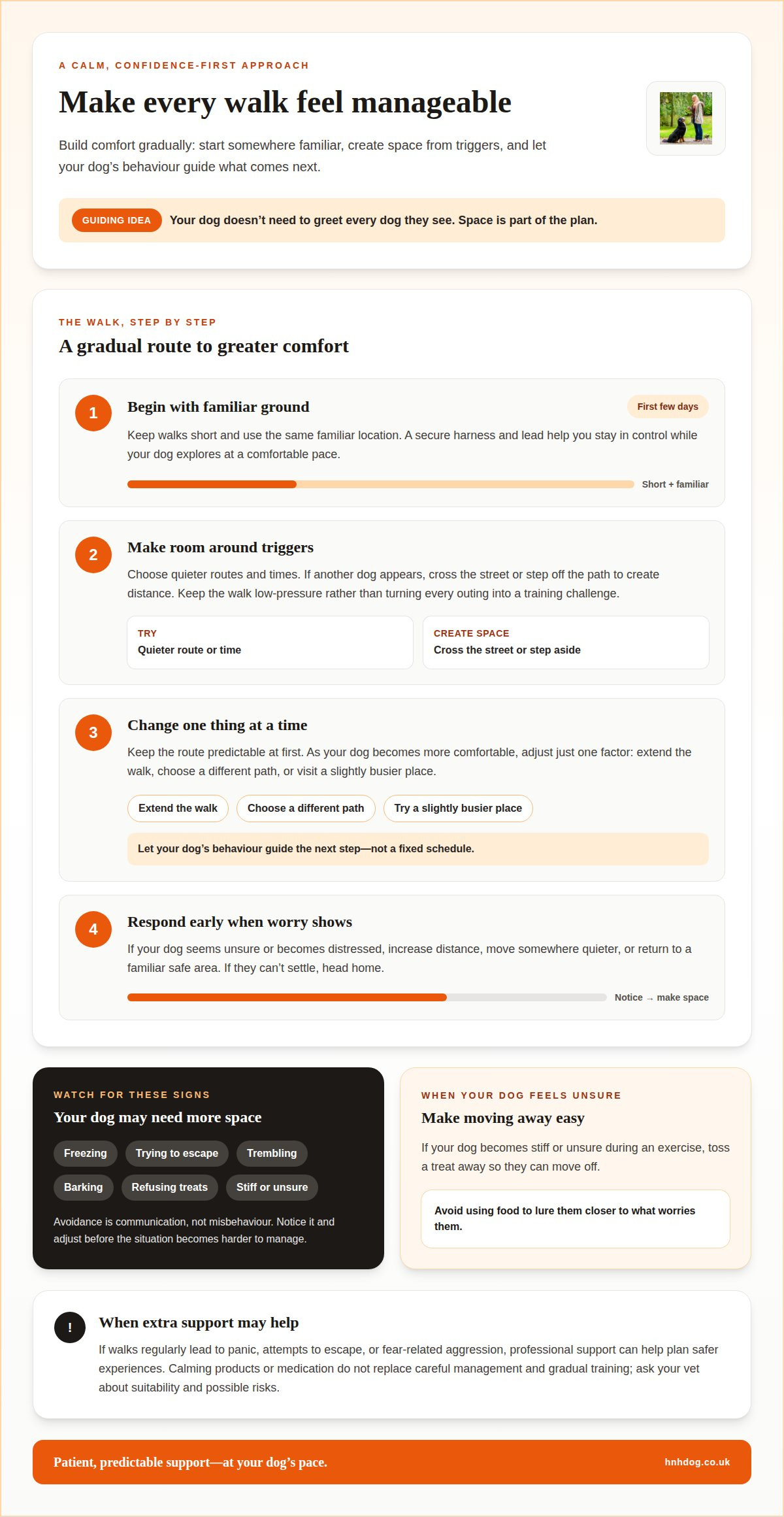
For an anxious dog, a busy London pavement can bring sudden noises, unfamiliar people and approaching dogs together. In the first few days after adoption, keep walks short and use the same familiar location. A secure harness and lead help you stay in control while allowing your dog to explore at a comfortable pace.
Choose quieter routes and times, and avoid turning every walk into a training challenge. If another dog appears, cross the street or step off the path to create distance. Your dog doesn’t need to greet every dog they see. Space gives them room to notice what’s happening without being pushed into contact.
Keep the route predictable at first. As your dog becomes more comfortable, change one factor at a time: extend the walk, choose a different path or visit a slightly busier place. Changing distance, duration and environmental difficulty together can be hard for your dog to manage. Let their behaviour guide the next step rather than following a fixed schedule.
Watch for signs that a situation feels too difficult, such as freezing, trying to escape, trembling, barking or refusing treats. Increase the distance, move somewhere quieter or return to a familiar safe area. If your dog becomes stiff or unsure during an exercise, toss a treat away so they can move off without being drawn towards what worries them. Don’t use food to lure them closer to a feared trigger.
Calming products or medication may be considered for a fearful dog, but they don’t replace careful management and gradual training. Ask your vet about suitability and possible risks, as these depend on the product and your dog’s health. Avoid giving medication or supplements without veterinary advice.
Keep walks low-pressure: allow sniffing, turn away from triggers early and head home if your dog can’t settle. If walks regularly lead to panic, attempts to escape or fear-related aggression, seek professional support to plan safer experiences.
4. Recognising when a dog is too close to a trigger
Your dog’s body language can show when a person, dog or object feels too close. Watch for a tucked tail, ears held back, shaking, lowered posture, freezing or repeated attempts to move away. Avoidance is communication, not misbehaviour. If your dog can’t escape, barking or growling may follow as their discomfort increases.
Notice what your dog can still do. At a comfortable distance, they may look at a trigger, then turn away, sniff or accept a treat. As the distance closes, they might stop taking food, become stiff or fix their gaze. These changes suggest the situation is getting harder to manage. Create more space before expecting your dog to interact or respond to a cue.
Give your dog time to process what they see. Move away calmly, or use a parked car, hedge or quiet side street as a visual barrier. Don’t insist on greetings, touch or direct eye contact. Visitors can look to the side and let your dog choose whether to approach. Patience helps you understand their signals without adding pressure.
As your dog grows more confident, you may notice them exploring more readily, settling more easily or recovering faster after a startling sound. They might also accept treats in situations that previously felt difficult. Progress can vary between settings: a dog comfortable with a neighbour may still find a busy London pavement challenging. Keep observing rather than assuming one success applies everywhere.
Avoid forcing a nervous dog towards a trigger, luring them closer with food, or punishing barking and growling. These responses can increase fear and make it harder for them to communicate. If your dog freezes, becomes stiff or tries to escape, reduce the difficulty and give them room to feel safe again.
If reading your dog’s signals or managing reactions feels difficult, seek tailored behaviour support to plan safer, more comfortable experiences.
H&H Dog
H&H Dog provides personalised care that takes each dog’s needs and temperament into account. If your rescue dog finds everyday experiences challenging, this individual approach can help you identify what feels manageable and which routine care may suit them. H&H Dog offers mobile grooming and walking, including Full Groom, Bath & Brush, Puppy’s First Groom and Group Dog Walking. These services aren’t a substitute for behaviour support, and group walks may not suit a dog who is currently overwhelmed by other dogs. Focus first on what helps your dog feel safe, then choose care that fits their needs.
If you’d like to discuss your dog’s care, contact H&H Dog.
Keep building trust, one choice at a time
Start by noticing what helps your dog feel safe, then make room for more of those moments. A quiet pause, choosing to explore or settling after a new experience can all guide how you shape the day. Learning how to build confidence in a nervous rescue dog becomes easier when you focus on your individual dog, rather than expecting a particular pace or personality.
Keep respecting signs that your dog needs space, and adjust the situation before worry escalates. If fear regularly disrupts everyday life, or you’re unsure how to adapt your approach, tailored support can help you make a thoughtful plan around your dog’s needs and your shared routines.
Contact H&H Dog for support to discuss the care that may suit your dog. With patience and attention to their signals, you can keep building a relationship where they feel understood and secure.
Continue building confidence with H&H Dog
H&H Dog offers personalised care tailored to each dog’s needs and temperament, drawing on over 20 years of experience. If your rescue dog is nervous about grooming, walks or training, this can be a natural next step alongside the patient, gradual confidence-building you practise at home.
Choose from mobile grooming, walking, puppy training, one-to-one dog training and behavioural consultations to match the support your dog needs.
Frequently Asked Questions
What can I do to help my shy dog?
Make home easier to navigate by giving your dog a quiet place away from busy doorways and visitors. For example, set up a bed in a calm room and ask guests not to enter that space. Let your dog choose whether to join the room, and keep everyday interactions calm and predictable. This gives them a safe option without requiring them to socialise.
Can you train a dog to be more confident?
Yes, training can help a dog feel more capable, but confidence doesn’t mean becoming sociable with everyone. Offer simple choices during calm activities, such as whether to investigate a new toy or leave it alone. Notice how your dog responds, and let their comfort guide what comes next. A dog who prefers to observe quietly can still make meaningful progress.
How Do I Build Confidence in a Rescue Dog?
Build confidence by giving your dog safe opportunities to make choices in everyday situations. For example, let them watch you open a cupboard from a comfortable spot before approaching it together. If you’re learning how to build confidence in a nervous rescue dog, focus on what helps your individual dog feel secure, rather than expecting a particular personality or pace of change.
How Do I Introduce New Experiences?
Choose one new experience and make it easy to observe without requiring close contact. If a friend visits, they can sit quietly while your dog watches from another room. Keep an escape route open, and end the experience if your dog chooses to retreat. This lets your dog take things in without being cornered or expected to interact.
How Should I Reward My Rescue Dog?
Reward the behaviour you’d like to see again, such as choosing to investigate a sound or settling near you. Deliver the reward promptly, so your dog can connect it with their choice. Keep treats small, and remember they should make up no more than 10% of your dog’s total daily food consumption. Calm praise or a favourite game may also suit some dogs.
How do you know if your dog is nervous?
Look for changes from your dog’s usual behaviour, such as withdrawing, pacing, whining or becoming unusually still. Context matters: a dog may yawn when tired, but repeated yawning alongside avoidance can suggest discomfort. Notice what happened just before the change and whether your dog settles when given space. If behaviour changes suddenly, speak to your vet, as pain or illness can affect behaviour.