
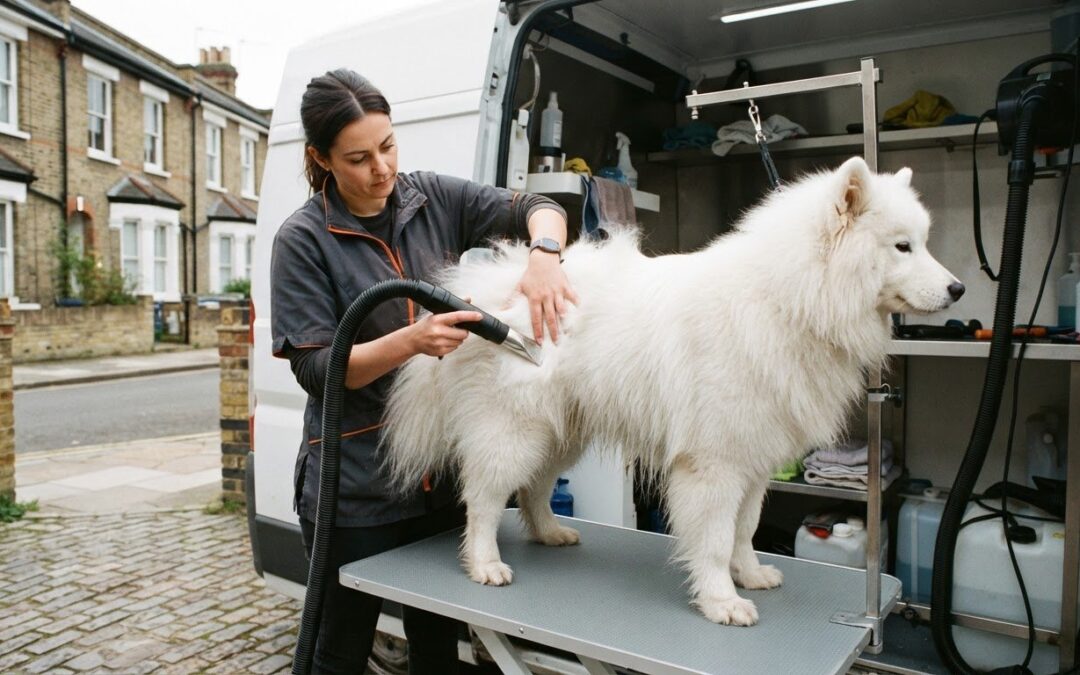
A Samoyed’s double coat needs a steady grooming schedule, not a close shave. Plan a professional bath and deshedding every 6 to 8 weeks, with an additional appointment during each coat blow. Between appointments, brush three to four times a week; mobile grooming for Samoyeds can bring this specialist coat care to your door.
It’s understandable to wonder whether frequent bathing will harm your Samoyed’s coat or whether shedding means it needs to be cut short. The aim is to remove loose undercoat while preserving the coat’s natural structure, so shaving isn’t the answer. This guide explains how to plan professional grooming, how seasonal coat blows affect care, and what careful bathing and drying involve. You’ll also learn what to expect from mobile grooming for Samoyeds, so you can plan around your dog’s coat and comfort.
Key Takeaways
- Learn why a Samoyed’s two-layer coat needs careful deshedding rather than a close clip.
- Understand why brushing out loose undercoat before bathing helps prevent dense clumps.
- See what a mobile grooming appointment should account for, from coat condition to your dog’s comfort.
- Find out why grooming time can vary and what affects the work involved.
Double-coat care and why shaving is discouraged
Plan care around your Samoyed’s double coat and seasonal shedding, not appearance alone. These practical steps can help you prepare for an appointment and explain what your dog needs.
-
Have a Professional Assess Your Samoyed’s Double-Coat Care Needs
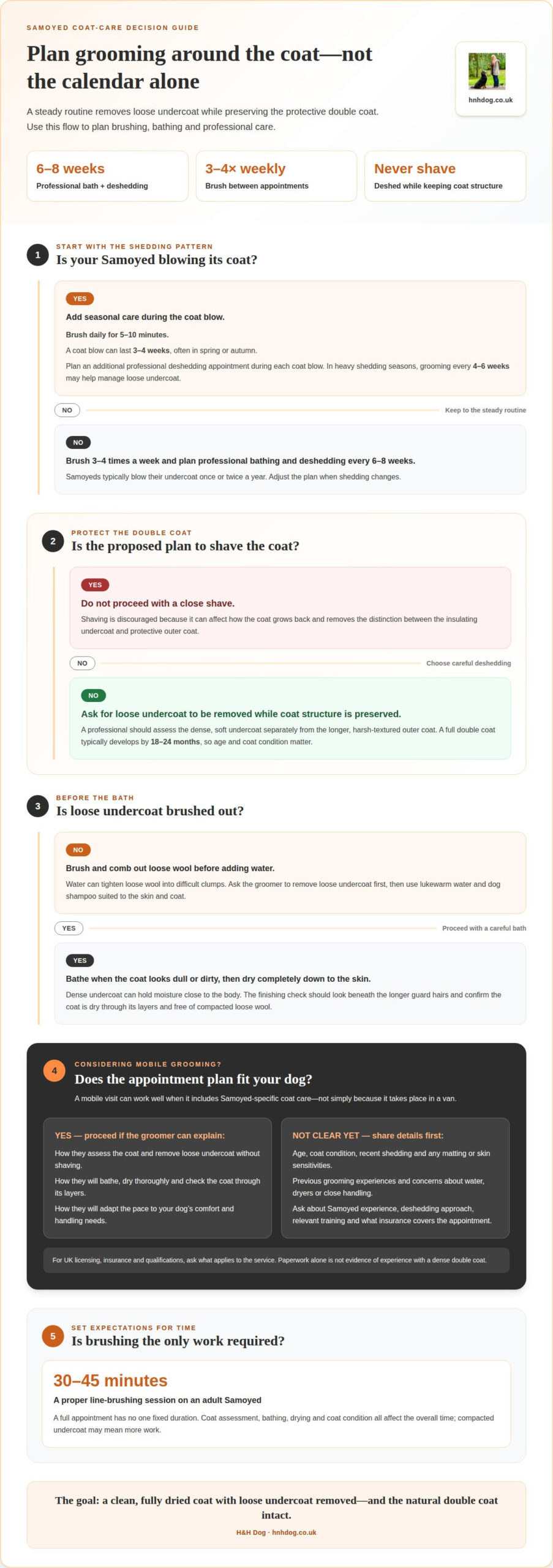
Ask the professional to assess the dense, soft undercoat and longer, harsh-textured outer coat separately. A Samoyed’s full double coat typically develops by 18 to 24 months, so age and coat condition both matter. Discuss brushing three to four times a week, plus daily brushing for five to ten minutes during a coat blow, which can last three to four weeks in spring or autumn.
-
Ask a Professional Groomer About Avoiding Shaving
Ask how the appointment will remove loose undercoat without shaving the coat. Shaving is discouraged because it can affect how the double coat grows back and removes the distinction between the insulating undercoat and protective outer coat. Samoyeds typically blow their undercoat once or twice a year. Plan professional deshedding around these seasonal changes, alongside regular bathing and coat care.
- When choosing a mobile groomer, ask about their experience with Samoyed coats, their deshedding approach and how they’ll keep your dog comfortable. For UK licensing, insurance and qualifications, ask what applies to their service, what insurance covers the appointment and what relevant training they hold. Don’t treat paperwork alone as evidence of experience with a dense double coat.
- Before the appointment, share your Samoyed’s age, coat condition, recent shedding pattern and any sensitivities or handling concerns. Mention whether the coat is currently blowing its undercoat, since that can affect the work needed. Professional baths and deshedding are commonly planned every 6 to 8 weeks, with an additional visit during each coat blow; heavy shedding seasons may call for appointments every 4 to 6 weeks.
Bathing and drying
A careful bath starts before the coat gets wet. Loose undercoat should be removed first, then the coat dried thoroughly down to the skin.
-
Have a Professional Bathe the Samoyed
Consider a professional bath when the coat looks dull or dirty, and ask for loose undercoat to be combed out beforehand. Water can tighten loose wool into difficult clumps, so thorough brushing before the bath matters. A professional can use lukewarm water and dog shampoo suited to the skin and coat. Bathe a Samoyed puppy only when dirty, using gentle dog shampoo.
-
Have a Professional Dry the Coat
Ask for the coat to be dried completely down to the skin, not just smoothed on the surface. A dense undercoat can hold moisture close to the body, so the finish should include checking beneath the longer guard hairs. Keep your Samoyed in a small, clean area until fully dry. For puppies, keep them warm until drying is complete.
- Share any handling concerns before the bath begins. A wet coat can feel unfamiliar, and a calm, step-by-step process gives your dog time to adjust. Washing and drying can be paced around your Samoyed’s comfort, with extra attention to areas where the coat is especially dense.
- Ask what the finishing check covers: the coat should be dry through its layers, clean, and free of compacted loose wool. If your Samoyed is a puppy, mention its age and previous bathing experience so the process can be adapted. For a home-visit appointment, professional mobile grooming can bring bathing and coat care to your door.
Are mobile dog groomers in the UK equipped to groom Samoyeds and their double coats?
Yes, mobile grooming for Samoyeds can work well when the appointment includes appropriate care for the full coat. Consider what the groomer will do, rather than assuming that a van alone makes the service suitable.
- Describe your Samoyed’s coat and current needs when arranging an appointment. Mention their age, recent shedding, matting, skin sensitivities and comfort with handling. A young dog still developing its adult coat may need a different pace from an adult experiencing a seasonal coat blow. These details help tailor the appointment instead of relying on a standard routine.
- Ask for a clear outline of the appointment, from coat assessment to the final finish. The groomer should explain how they’ll manage loose undercoat, bathing and thorough drying without shaving. During a spring or autumn coat blow, for example, loose wool may call for more deshedding than at other times. A clear process helps you understand what care your dog will receive.
- Discuss your dog’s previous grooming experiences and signs of discomfort. If a dryer, water or close handling has worried your Samoyed, explain what happened and what helped. The groomer can introduce each part of the appointment at a considered pace and pay attention to your dog’s response. Calm handling matters as much as coat technique for a comfortable visit.
- Plan the timing around coat condition, not just a convenient date. A professional bath and deshedding is generally scheduled every 6 to 8 weeks, with an extra appointment during each coat blow. During heavy shedding seasons, professional grooming every 4 to 6 weeks may help manage the additional loose undercoat. Share when shedding began so the appointment reflects the current coat.
A mobile groomer’s suitability comes down to a Samoyed-specific plan: careful coat assessment, appropriate deshedding, patient handling and a complete finish. Clear information beforehand helps the professional tailor the visit to your dog’s coat and comfort.
How long does a mobile Samoyed grooming appointment usually take?
A full appointment doesn’t have one fixed duration. A proper line-brushing session on an adult Samoyed takes 30 to 45 minutes, while bathing, drying and coat condition affect the overall time.
- Ask for an estimate based on the specific work planned, not brushing alone. Line-brushing an adult coat takes 30 to 45 minutes, but a bath and complete drying add separate stages. The groomer also needs to assess the coat before starting. A Samoyed with compacted undercoat needs different attention from one whose coat is already well maintained.
- Mention whether your dog is shedding heavily. During a coat blow, loose undercoat can mean more deshedding work than a routine visit. Explain when the shedding began and whether it has changed, so the groomer can plan the appointment without rushing your dog or their coat.
- Describe your Samoyed’s comfort with handling, bathing and drying. If your dog finds a dryer unsettling, a patient pace and breaks may matter more than finishing quickly. Tangles and dense areas of loose wool also need careful attention. The appointment should take both coat condition and your dog’s responses into account.
- Allow time for each stage: coat assessment, brushing and deshedding, bathing, thorough drying, then a final check. An estimate based only on the bath misses the time needed to work through a dense double coat. Tell the groomer about matting, recent coat changes and handling concerns beforehand. To plan your dog’s grooming appointment, arrange a Samoyed grooming visit.
H&H Dog: Mobile dog grooming
H&H Dog provides mobile grooming for Samoyeds, with care tailored to each dog’s needs and temperament. A Bath & Brush covers essential coat care, while a Full Groom offers a broader grooming option.
Share your Samoyed’s age, coat condition, shedding pattern and any handling sensitivities when arranging an appointment. This helps tailor the visit, whether your dog needs routine coat care or is experiencing a seasonal coat blow. H&H Dog also offers Puppy’s First Groom for a puppy’s early grooming experience.
To discuss grooming for your Samoyed, contact H&H Dog.
Make coat care part of your Samoyed’s routine
A thoughtful plan for mobile grooming for Samoyeds starts with your dog, not a standard appointment template. Consider how they respond to handling, which parts of grooming they find uncomfortable, and how their coat changes through the year. Sharing these details gives the groomer a useful picture before the appointment and helps shape care around your Samoyed.
Keep the conversation open as your dog grows or their grooming experience changes. A puppy’s first visit, a newly unsettled response to drying, or a change in coat condition can all affect what feels manageable. The aim is steady, considerate care that supports your dog’s comfort as well as coat maintenance.
If you’re ready to plan the next step, contact H&H Dog to discuss grooming. A clear conversation can help you decide what suits your Samoyed, so you can approach their next appointment with confidence.
Frequently Asked Questions
How often should you groom a Samoyed?
Brush a Samoyed three to four times a week, increasing to daily brushing during a coat blow. Keep sessions short and steady, especially for a young dog getting used to handling. Check the ears weekly and trim the nails every three to four weeks. A consistent routine helps you notice changes in coat condition between professional appointments.
Do Samoyeds shed a lot?
Yes. Samoyeds typically shed their undercoat once or twice a year, with heavier coat blows in spring and autumn. Each blow can last three to four weeks, so loose fur may be much more noticeable during these periods. Keep up regular brushing and expect the coat to need extra attention while shedding. Shedding continues outside coat-blow seasons, but is generally less dramatic.
How often should I bathe a Samoyed?
Plan a bath every 6 to 8 weeks, or sooner if the coat looks dull or dirty. A puppy generally needs bathing only when dirty. Before water reaches the coat, loose undercoat should be brushed and raked out, since wet wool can form difficult clumps. After washing, the coat needs to be dried completely to the skin, not left damp beneath its surface.
What grooming services do UK mobile groomers offer for Samoyeds?
Services vary, but H&H Dog’s mobile grooming includes bathing, brushing, nail trimming and ear cleaning. For Samoyeds, H&H Dog offers a Bath & Brush or Full Groom; Puppy’s First Groom is available for a puppy’s early grooming experience. H&H Dog serves North and North West London, bringing grooming to the owner’s doorstep. The best fit depends on your dog’s age and coat-care needs.
How often should a Samoyed be professionally groomed?
Arrange professional grooming every 6 to 8 weeks, with an additional appointment during each coat blow. During heavy shedding seasons, spring and autumn, professional visits every 4 to 6 weeks may help manage the extra loose undercoat. Treat these as a planning guide: a coat blowing heavily may need attention sooner than one staying clean and free of compacted wool.
Can Samoyeds be shaved, and what are the risks of clipping a double coat?
Samoyeds shouldn’t be shaved, because shaving can affect how their double coat grows back. The coat has a dense, soft undercoat beneath a longer, harsher outer coat, and shaving changes its natural structure. If you’re concerned about heat, shedding or coat condition, discuss deshedding and suitable coat care rather than choosing a close shave.