
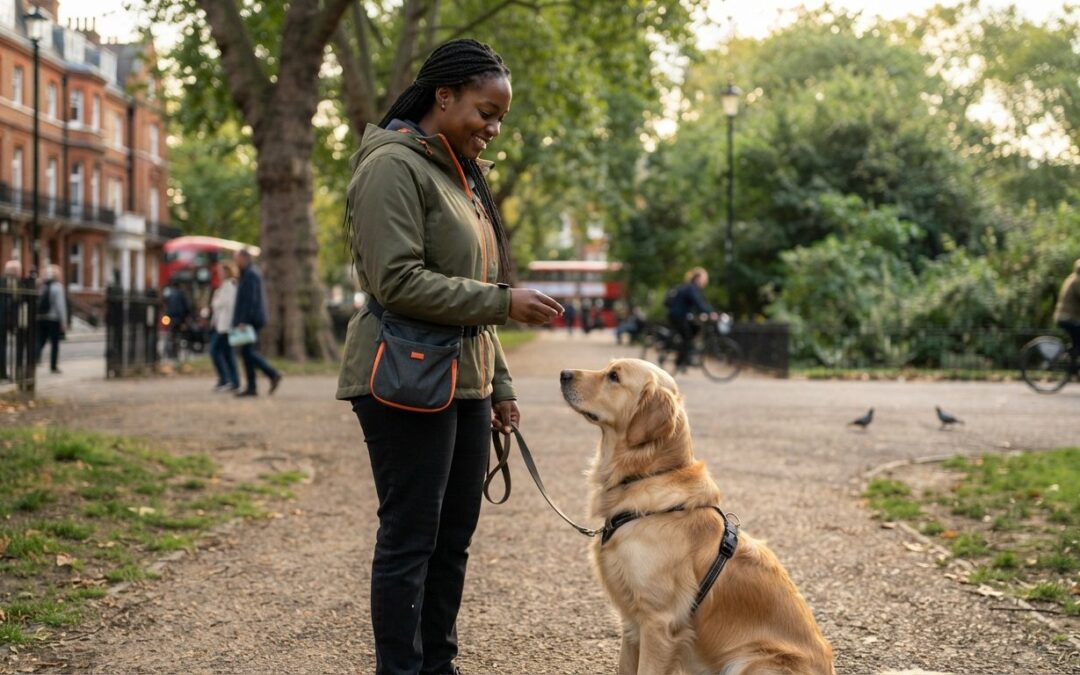
Building focus in easily distracted dogs starts with small, achievable steps: reward your dog for checking in, practise around mild distractions, and increase just one challenge at a time. If your dog struggles to respond or take a treat, create more distance and make the next practice easier. Distraction training can take weeks, so steady practice matters more than rushing towards a quick result.
It’s frustrating when your dog seems to hear you at home but loses focus outside. That doesn’t mean they’re being difficult: sights, sounds and smells can make it harder for them to notice and respond to you. This guide explains why distractions can overwhelm your dog’s attention and how to build it gradually. You’ll learn how to reward voluntary check-ins, use calm routines on walks, teach your dog to disengage from distractions, and adjust your distance when they need more space. A patient, consistent approach can make training more manageable for both of you.
Key Takeaways
- Build training difficulty gradually, changing one challenge at a time so your dog can stay engaged and succeed.
- Reward voluntary check-ins on walks with something your dog values, then let them return to sniffing.
- Practise simple attention cues in a quiet place before using them around more compelling distractions.
- Watch for signs your dog needs more space, such as a fixed stare, lead tension or turning away from familiar treats.
- Consider what your dog finds rewarding or absorbing, including scents and movement, and adapt practice to suit their needs.
Gradually increasing training difficulty
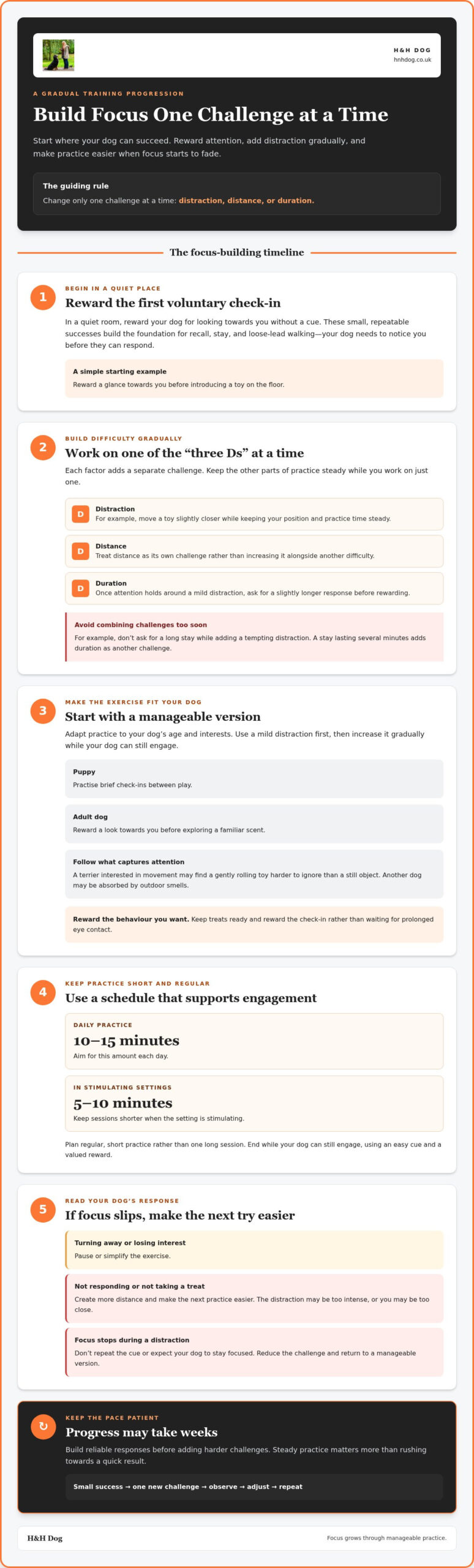
Train for 10-15 minutes a day, then keep practice in stimulating settings to 5-10 minutes. Progress through distraction-training steps may take weeks, so build reliable responses before adding harder challenges.
-
Build Attention as a Training Foundation
Start in a quiet room by rewarding your dog for looking towards you without a cue. This voluntary attention lays the foundation for recall, stay and loose-lead walking, because your dog must notice you before they can respond. It also supports building focus in easily distracted dogs through small, repeatable successes. For example, reward a glance towards you before introducing a toy on the floor.
Increase difficulty gradually, changing only one factor at a time. The three Ds are distraction, distance and duration, and each adds a separate challenge. Keep your position and practice time steady while moving the toy slightly closer. Avoid asking for a long stay while adding a tempting distraction: that combines challenges before your dog is ready.
-
Tailor Focus Practice to Age and Personality
Choose a starting point your dog can manage, then adapt the exercise to their age and interests. A puppy might practise brief check-ins between play, while an adult dog can look towards you before exploring a familiar scent. Keep treats ready and reward the behaviour you want, rather than waiting for prolonged eye contact.
Notice what captures your dog’s attention. A terrier interested in movement may find a gently rolling toy harder to ignore than a still object; another dog may be absorbed by outdoor smells. Start with a mild version of the distraction and increase it gradually. If your dog stops responding, make the task easier instead of repeating the cue or expecting them to stay focused.
-
Set a Training Schedule
Plan regular, short practice rather than one long session. Aim for 10-15 minutes a day, and keep sessions in stimulating settings to 5-10 minutes. End while your dog can still engage, using an easy cue and a valued reward. Watch your dog’s behaviour: turning away or losing interest means it’s time to pause or simplify.
Build duration separately. Once your dog can stay attentive around a mild distraction, ask for a slightly longer response before rewarding. A stay lasting several minutes adds duration as another challenge, so don’t combine it straight away with a much stronger distraction. When building focus in easily distracted dogs, progress at a pace that lets your dog succeed. If reactivity, chasing or a history of ignoring recall makes practice difficult, seek support from a trainer or behaviourist.
Calm routines and rewarding attention on walks
Plan walks so your dog can notice you without being hurried. Reward calm engagement, including small check-ins, and adapt your approach to the distractions around you.
-
Match Rewards to Distraction Levels
Carry rewards your dog values and match them to the environment. In a quiet street, a familiar treat may hold their attention; near traffic or another dog, choose food, a toy or praise your dog finds more motivating. Watch whether they can still respond and eat comfortably.
If your dog ignores a reward, don’t keep offering it as frustration builds. The distraction may be too intense, or you may be too close. Create more space and try an easier reward or a quieter route. Rewards should help your dog feel safe and connected, not turn the walk into a test they can’t manage.
-
Reward Noticing Triggers
When your dog notices a trigger, such as a dog across the road, stay calm and mark the moment they look. Say “yes”, then offer a treat. This pairs the sight of the trigger with something positive without requiring your dog to stare at you or ignore what they’ve noticed.
Let your dog look, then reward them if they can turn back towards you. If they fix their gaze or become tense, increase the distance rather than waiting for a response. For example, move behind a parked car or cross to a quieter pavement. The aim is to reward a manageable observation, not force close contact.
-
Reward Attention Toward the Owner
Notice when your dog engages spontaneously during a walk. When they glance back, mark the check-in with “good” or “yes”, then give a treat or calm praise. You don’t need to call repeatedly: rewarding attention your dog offers voluntarily makes checking in worthwhile.
Keep the routine clear: mark the look, reward beside you, then continue walking. If your dog looks back after hearing a sound or seeing movement, that moment counts too. Avoid scolding or showing frustration when they miss a cue. Instead, reduce competing stimulation and make the next opportunity easier to notice.
-
Use Preferred Distractions as Rewards
Use access to something your dog wants as a reward for responding nearby. Ask for a simple check-in before allowing a sniff at a tree or a brief look towards a distant dog. Let the preferred activity follow the response, making the trigger part of a cooperative routine rather than something to pull towards.
Keep the sequence consistent: wait for your dog to turn back, mark the engagement, then move towards the sniffing spot. Don’t use this approach if the dog is pulling hard or too overwhelmed to respond. For tailored guidance with walk-time training, explore one-to-one dog training support.
Teaching dogs to tune out distractions
Build attention with a marker, a check-in game and simple focus cues, starting at home before practising near distractions. Useful exercises include rewarding a look back, responding to their name and leaving an object alone. Move closer only while your dog can still engage.
-
Teach and Proof a Marker Cue
Choose “yes” or “good” as your marker word, then say it and immediately give a treat. Practise in short bursts of 10-20 seconds, as Woodgreen recommends, so your dog learns the word predicts a reward. Check that they turn towards you after hearing it before adding more activity.
Proof the marker gradually: practise in different rooms, then in the garden, rewarding the same response each time. Avoid calling the marker repeatedly if your dog is focused elsewhere. Say their name once, then give a clear cue when needed. If they can’t respond, simplify the setting rather than raising your voice.
-
Teach Focus and Leave-It Cues
Teach “watch me” in a quiet space by saying the cue once and rewarding eye contact. For “leave it”, begin with a low-value object in your closed hand; reward your dog for moving their nose away or looking back at you. Keep the object safely out of reach, and practise each cue separately before combining them.
Once your dog responds at home, practise near a mild distraction. On a walk, ask for “watch me” before moving closer to an interesting object. If your dog can’t respond, add distance. A reliable recall and an emergency focus cue can also help regain attention in exciting surroundings, but practise them before relying on them outdoors.
-
Practice the Check-In Game
Start the check-in game at home or in the garden, where few distractions compete for your dog’s attention. Toss a treat a short distance, let your dog eat it, then wait for them to look back. Reward the check-in with another treat. If they check in less often, Woodgreen recommends waiting without prompting them.
Repeat the game in a quiet outdoor space before trying a busier setting. Keep your body relaxed and give your dog time to choose to reconnect. Avoid calling their name to prompt every look: the aim is voluntary engagement. Once the check-in is dependable in one place, change the setting before introducing a stronger distraction.
-
Build Focus Around Distractions
Choose a mild distraction and start far enough away that your dog can take food, respond to their name and walk on a loose lead. Let them notice the trigger. When they look back, wait a second or two, then mark and reward their disengagement. This teaches them that turning away from a distraction is worthwhile.
Repeat only while your dog remains responsive, then move a little closer in a later practice. If they fix their stare or stop taking food, increase the distance instead. Dogs don’t need to greet every person or dog they see; calm neutrality is a useful goal. This gradual approach builds focus without forcing close contact.
Adjusting distance when a dog struggles to check in
If your dog stops checking in, treat it as information, not disobedience. Increase the distance or reduce the distraction so they can listen and re-engage.
- Read your dog’s signals before asking again. Look for a fixed stare, sudden tension on the lead or refusal to take a familiar treat. These signs may mean your dog needs more space from the trigger. For example, if they notice another dog and become still, don’t repeat their name or pull them closer. Calmly create distance, using a parked car or quieter path as a visual break.
Give your dog room to look away and recover. Pushing an over-aroused dog closer to a trigger to make them “get used to it” can make things worse. Instead, choose a distance where they can notice the trigger without losing the ability to respond.
- Increase distance when check-ins become less frequent. If your dog was looking back but now stays focused on a person, dog or passing vehicle, move away or reduce the distraction. Woodgreen recommends increasing distance or reducing distractions when a dog checks in less often. This makes the next response easier, rather than asking your dog to cope with a situation they’re struggling to manage.
Try changing one part of the scene. Cross the road, turn down a quieter street or wait behind a hedge while the other dog passes. When your dog can take a familiar reward and respond again, pause at that manageable distance before continuing.
- Reward disengagement without rushing the moment. When your dog looks towards a trigger, give them a second or two to turn back voluntarily. Mark their renewed attention with “yes” or “good”, then reward them. This teaches your dog that noticing something doesn’t mean they must approach it, and that checking back with you is worthwhile.
If they don’t turn away, avoid repeating the cue or tightening the lead. Create more space first. For example, step away from a busy pavement before trying the exercise again. The goal is a calm choice to disengage, not forced eye contact while your dog remains tense.
- Practise proactive check-ins in easier places. Build the habit at home, in the garden or on a quiet route before expecting it near a challenging trigger. Reward your dog when they glance towards you without being called. On a walk, notice those voluntary check-ins and respond consistently, even when nothing is happening nearby.
Keep practice focused on successful moments. If your dog stops taking treats or checking in, end the exercise by moving to a calmer area. An easier route gives them space to settle and lets you try again when the environment is less demanding.
Why dogs lose focus around distractions
- Identify what is competing for your dog’s attention. A busy pavement combines movement, traffic noise, unfamiliar people and close encounters with dogs. Each input can compete with your voice, especially if your dog is already alert or excited. In woodland, a scent trail may be more compelling than a familiar cue. Notice what your dog tracks, sniffs or listens for in each situation.
Breed tendencies can offer clues, not a diagnosis. Hunting breeds and terriers may be especially drawn to wildlife smells in woodland. If your terrier follows a trail and misses your cue, the scent is part of the challenge. Adapt the exercise to the setting instead of assuming your dog is deliberately ignoring you.
- Consider your dog’s emotional state, not just their outward behaviour. A dog who stares at another dog may be curious, worried or over-aroused. Those feelings can look similar, but affect whether they can respond to you. Watch for changes such as sudden stillness, a tight lead or refusal of a familiar treat. These signs help you judge whether the situation is manageable.
When your dog can’t listen or take food, reduce the pressure. Move away from the trigger or choose a quieter route, then try an easier exercise. Gradual exposure means letting a dog notice a trigger without causing a negative emotional response. Moving closer while they’re overwhelmed can make the challenge harder, not teach calmness.
- Consider what your dog has learned from previous walks. If pulling towards another dog has repeatedly led to a greeting, reaching that dog may have rewarded the pulling. Your dog can learn that the behaviour works, even if you intended to teach loose-lead walking. Consider what happens immediately after a pull, bark or dash, then change the sequence so calmer choices earn praise or another suitable reward.
For example, pause before approaching a place your dog wants to sniff. Reward a check-in, then let them move towards it on a loose lead. This makes engagement useful without requiring you to compete with every scent or person. What your dog can repeat depends partly on what the situation has taught them.
- Match the training to the distraction, rather than expecting focus everywhere. A cue practised in a quiet room may not yet work beside woodland wildlife or a crowded pavement. Dog training needs to account for the setting, your dog’s interests and their current ability to respond. Begin with an easier version of the challenge, then make one change at a time as your dog succeeds.
If the same distraction repeatedly overwhelms your dog, personalised support can help you understand the pattern and plan suitable practice. Book 1-to-1 Dog Training to work on attention around the situations your dog finds difficult.
H&H Dog: Full Groom
H&H Dog’s Full Groom is a separate care option for dogs who need grooming, not a substitute for focus training. Its mobile grooming service brings grooming to your doorstep, which may suit dogs who find travel or unfamiliar settings challenging.
Keep attention practice and grooming expectations distinct. H&H Dog’s Puppy Training addresses a different need if your dog struggles to focus around other dogs or outdoor triggers. For coat care, choose the grooming option that suits your dog, whether that’s a Full Groom or a Bath & Brush. A calm, individual approach can help support your dog’s comfort during care.
Contact H&H Dog to discuss grooming for your dog.
Take the next step at your dog’s pace
Progress isn’t measured by whether your dog can ignore every distraction. A useful next step is to notice which situations help them stay comfortable and which still feel difficult. Use that insight to shape practice around your dog, rather than expecting the same response in every setting. With patience and thoughtful support, building focus in easily distracted dogs can become part of a calmer, more connected routine.
If you’d like guidance suited to your dog’s needs, contact H&H Dog for training support. You can also explore separate grooming care: H&H Dog offers Full Groom, Bath & Brush, and Puppy’s First Groom. These services meet grooming needs, while training support addresses attention and behaviour.
Keep observing, adjusting and celebrating the moments your dog chooses to reconnect. Each small step gives you clearer insight into how to support them.
Frequently Asked Questions
How soon will I see results?
Early changes may appear before your dog can focus reliably in every setting, while distraction training may take weeks. Track one observable sign, such as turning towards you when a bicycle passes at a manageable distance. Note the setting and your dog’s response after each practice. This helps you spot gradual progress without expecting the same performance on every walk.
Is Your Dog Choosing Distractions Over You – No Matter How Hard You Try?
Not necessarily. A dog focused on a squirrel or another dog may be responding to an immediate, compelling stimulus, not rejecting you. Consider what happened just before they stopped responding: a sudden movement, unfamiliar sound or close approach may have changed how they felt. In that moment, reduce pressure and make space. Repeatedly calling over the distraction can make your cue easier to ignore.
What Is Engagement and Why Does Your Dog Lose It?
Engagement means your dog is willing to notice and respond to you, rather than simply staying beside you. It can fade when a setting becomes more stimulating or your dog feels uneasy. For example, a dog who happily follows you through a quiet park may disengage near a playground with running children. Read that change as useful information about the environment and your dog’s comfort.
When should I consult a vet or qualified dog behaviourist about distractibility
Seek support from a qualified dog behaviourist or trainer if your dog is reactive, chases, or has a history of ignoring recall.