
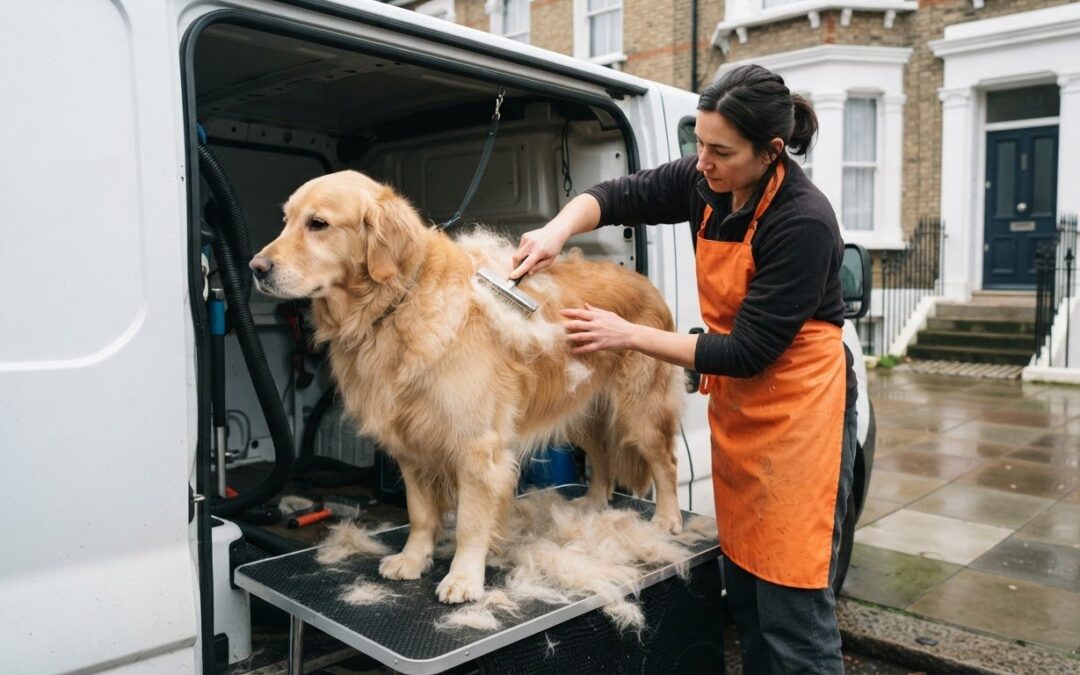
A winter coat trim doesn’t necessarily mean taking length off your dog’s coat. Mobile grooming for a winter coat trim can focus on removing loose undercoat and tidying the coat, with the approach tailored to your dog’s coat type. Double-coated dogs shouldn’t be clipped, as clipping can damage the undercoat and affect temperature regulation.
It’s understandable to want your dog comfortable and well cared for without removing coat that helps protect them. A thoughtful trim can remove loose hair while keeping the coat’s natural function in mind.
You’ll learn what a winter trim may involve, how a groomer removes loose undercoat and what can affect the length of an appointment. Timing varies with your dog’s breed, size, coat type and requested style, so there’s no single duration that suits every dog. Knowing what shapes the appointment helps you plan while keeping your dog’s comfort at the centre of the experience.
Key Takeaways
- For double-coated dogs, a winter tidy should preserve the coat rather than involve clipping that could damage the undercoat.
- Professional de-shedding can help remove dead, loose hair, while the right grooming approach depends on your dog’s coat.
- Appointment length varies with your dog’s breed, size, coat type and requested style, so plan for a tailored visit rather than a fixed duration.
- At-home mobile grooming brings the appointment to your doorstep, helping keep the experience centred on your dog’s comfort.
Clipper and scissor cuts
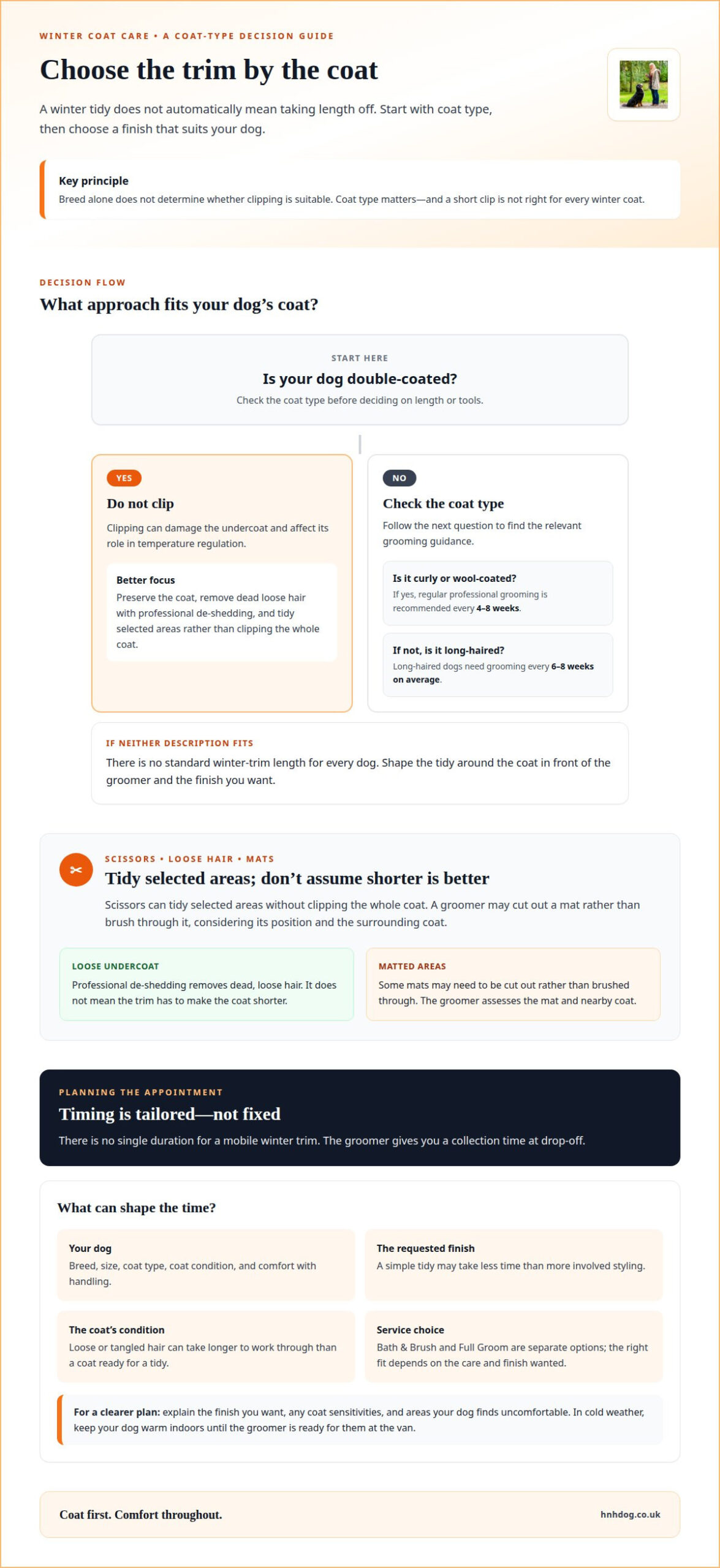
A winter trim should suit your dog’s coat, rather than follow a standard length. The key question is whether clipping could damage a double coat.
What a Winter Trim Includes
A winter coat trim can include tidying the outline with scissors and dealing with matted areas. Some mats may need to be cut out rather than brushed through, so the groomer considers their position and the surrounding coat. The aim is a practical finish that suits the coat, not automatically taking length off every area.
Breed alone doesn’t determine whether clipping is suitable: coat type matters. Curly- or wool-coated dogs need regular professional grooming, while double-coated dogs shouldn’t be clipped because clipping can damage the undercoat and affect temperature regulation. For curly or wool coats, regular appointments are recommended every 4-8 weeks; long-haired dogs need grooming every 6-8 weeks on average.
Risks of Cutting the Coat Too Short
Clipping a double-coated dog can damage its undercoat and affect its role in temperature regulation. That’s why a short clip isn’t the right way to manage every winter coat, even if it looks thick or sheds heavily. The decision should reflect coat type and the finish you want, rather than assuming shorter means easier to care for.
Scissors allow a groomer to tidy selected areas without automatically clipping the whole coat. For example, a groomer may address a mat that needs cutting out while preserving the surrounding length. If your dog has a curly or wool coat, the 4-8-week professional grooming interval gives a useful guide; long-haired coats are groomed every 6-8 weeks on average. A suitable winter trim is shaped by the coat in front of the groomer.
Grooming appointment duration
There’s no fixed duration for mobile grooming for a winter coat trim. Timing depends on your dog’s breed, size, coat type and requested style. A small, short-coated dog needing a simple tidy may take less time than a larger dog with a dense coat and more involved styling. The groomer will give you a collection time when your dog is dropped off.
A winter trim focuses on the tidy you’ve requested. Bath & Brush and Full Groom are separate service options, and the right fit depends on the care and finish you want. Explain your priorities clearly, such as preserving coat length while tidying specific areas, so the groomer can plan the appointment around them.
Coat condition also affects timing. Loose or tangled hair can take longer to work through than a coat that’s ready for a tidy, and your dog’s comfort matters throughout. Breed is useful context, but it doesn’t tell the whole story. Dogs of the same breed can differ in coat condition, tolerance for handling and grooming needs, all of which help shape a realistic collection time.
For mobile grooming for a winter coat trim in cold weather, keep your dog warm indoors until the agreed appointment, then bring them to the van when the groomer is ready. Before grooming begins, share practical details such as coat sensitivities, areas your dog finds uncomfortable and the finish you want. This gives the groomer a clearer plan.
An appointment for mobile grooming for a winter coat trim is planned around your dog’s needs, not a standard duration. Allow for the collection time provided at drop-off, and keep your phone available in case the groomer needs to discuss the coat or requested finish. Clear communication helps the visit stay focused on suitable care. If you’re considering mobile grooming at home, discuss the finish you have in mind.
Mobile dog grooming at home
A mobile appointment brings grooming to your home, so there’s no trip to a salon. The groomer can tailor the visit to your dog’s coat, requested finish and comfort, rather than treating every appointment as identical.
In the UK, dog grooming doesn’t require formal training or qualifications. Insurance is separate from qualifications, and cover depends on the policy. For your dog’s welfare, the grooming plan should account for coat condition and how comfortably they tolerate handling. Clear communication about sensitivities or difficult areas helps the groomer adapt the appointment.
When choosing mobile grooming in London, look for a clear explanation of the proposed trim and how it suits your dog’s coat. A double-coated dog, for example, shouldn’t be clipped, while a smooth-coated dog needs a different approach. A helpful discussion makes the distinction clear and focuses on your dog’s needs, rather than promising one finish for every breed.
Price depends on the individual case and is given after a quote request. Dog size, coat condition, requested grooming and location can all affect the quote. A dog with tangles or a dense coat may need a different amount of work from one needing a straightforward tidy. Sharing an accurate description of your dog helps the groomer understand the request.
Before the appointment, explain whether you want a trim, a bath with shampoo, or a more complete groom. This helps set expectations, since every mobile visit doesn’t include the same steps. For example, a winter tidy can focus on selected areas while preserving coat length, particularly when clipping isn’t appropriate.
At home, keep the handover calm and give the groomer useful details about your dog’s coat and handling preferences. Agree on the finish you want and any areas needing particular care before grooming begins.
De-shedding and loose undercoat
As the seasons change, some dogs’ undercoats begin to shed. A professional de-shedding treatment removes dead, loose hair without making a trim synonymous with cutting the coat shorter. This distinction matters for double-coated dogs: the aim is to manage shedding while respecting the coat’s structure and your dog’s comfort.
Brushing needs vary by coat. Double-coated dogs should be brushed several times per week in winter. Dogs with heavy coats may need brushing daily or multiple times a week to help prevent matting close to the skin. Coat density, length and condition all affect how loose hair behaves, so one schedule won’t suit every dog.
During a professional treatment, the groomer works with the coat rather than treating every area alike. Loose undercoat can collect beneath longer topcoat, especially on a heavily coated dog. Removing dead hair can reduce the amount left around the home, but de-shedding won’t stop natural shedding. The seasonal cycle continues.
Your dog’s comfort during handling matters too. A groomer can watch for signs of discomfort and adapt the pace or approach to the dog in front of them. For example, a dog unsettled by handling around the hindquarters may need a more considered approach there. A calm, individual process supports comfort while addressing loose hair.
At the appointment, describe where you notice loose hair or tangles, such as behind the ears or beneath the chest. That gives the groomer useful context alongside coat type and density. If you’d like professional help managing seasonal shedding, arrange mobile dog grooming with care tailored to your dog’s coat.
H&H Dog: Mobile dog grooming
H&H Dog provides mobile grooming in London, bringing the appointment to your doorstep and tailoring care to each dog’s needs and temperament. If you’re unsure whether your dog needs a winter tidy, Bath & Brush or Full Groom, share your priorities and details about their coat so the groomer can consider the right care.
For a puppy approaching grooming for the first time, Puppy’s First Groom provides an option suited to that stage. The right service depends on your dog and the care you’re seeking. A conversation can help you explain the coat type, areas needing attention and your preferred finish before arranging an appointment.
For a calm next step, contact H&H Dog to discuss grooming for your dog.
Choose a winter grooming plan that fits your dog
Start by deciding what would help your dog feel more comfortable through winter. Think about the result you want, such as a neat outline, less loose hair around the home or attention to a particular area. Your dog’s coat and response to handling can help guide the discussion.
To book mobile grooming for a winter coat trim, describe your dog’s usual grooming experience and any sensitivities that affect how they respond to handling. Explain which parts of the coat you want addressed and which you’d prefer to keep longer. This gives the groomer a useful starting point for planning care tailored to your dog.
When arranging mobile grooming for a winter coat trim, a clear conversation about your dog’s needs is a positive first step. If you’re ready to discuss suitable care, contact H&H Dog to book. You can feel more prepared for the appointment and help make the experience considerate of your dog.
H&H Dog and a winter coat trim
H&H Dog offers mobile dog grooming for owners considering a winter coat trim. Its team has over 20 years of experience and specialises in personalised care tailored to each dog’s needs and temperament.
When you’re ready to discuss grooming that suits your dog, contact H&H Dog. Services include Full Groom, Bath & Brush and Puppy’s First Groom.
Frequently Asked Questions
What should I ask a mobile groomer before booking a winter coat trim?
Ask how the groomer will adapt the trim to your dog’s coat and what the appointment involves, from handover to collection. Mention any skin sensitivities, health concerns or previous difficult grooming experiences, and ask how these will shape the handling. Clarify whether you want Bath & Brush or Full Groom, so the service matches the care you’re seeking.
What is the difference between a winter trim, a bath and brush, and a full groom?
A winter trim tidies the coat or selected areas while preserving its length where appropriate. Bath & Brush and Full Groom are separate services; explain the care and finish you want so the groomer can plan the work.
Which dog breeds need a winter coat trim, and which should not be clipped?
The right trim depends on coat type and condition, not breed alone. Double-coated dogs shouldn’t be clipped, as clipping can damage the undercoat and affect temperature regulation. Curly- or wool-coated dogs need regular professional grooming.